
The City as a Living Room
Plečnik’s Architecture of Intimacy
There is a grandness to many of Europe’s great capitals that is designed to make the individual feel small. We stand in the shadow of the Brandenburg Gate or at the center of the Place de la Concorde and feel the weight of empires - the cold precision of power and the vastness of history.
But then there is Ljubljana.
To walk through the center of the Slovenian capital is to experience a different kind of urbanism, one that doesn't demand your awe, but rather invites your company. This is the legacy of Jože Plečnik, the visionary architect who didn't just build a city; he furnished it. Under his hand, Ljubljana was transformed from a provincial outpost into a "living room" for the Slovenian soul.
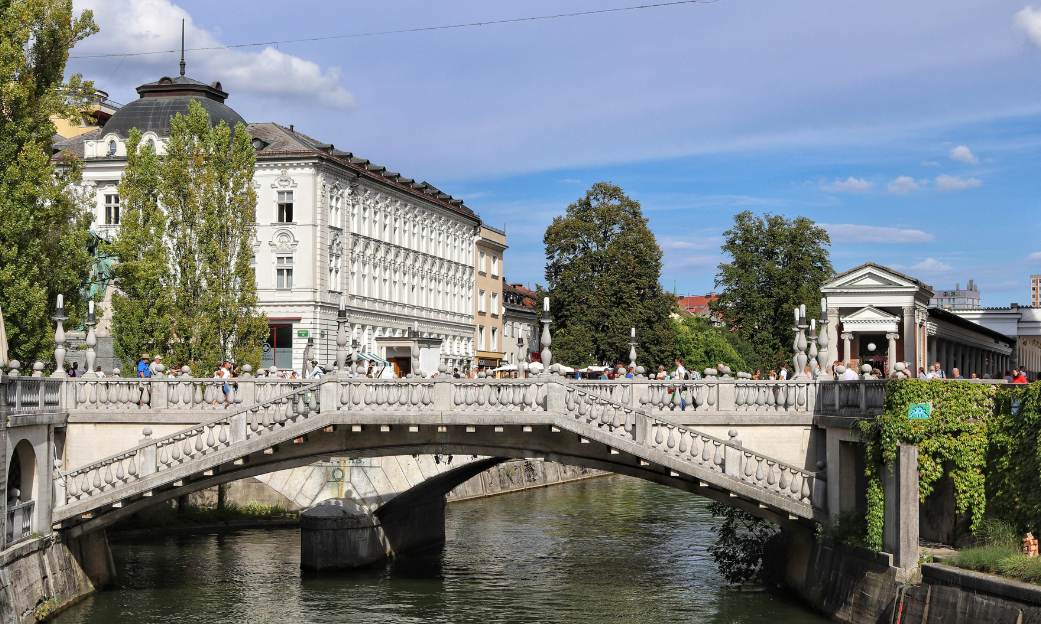
The Triple Bridge invites its travelers to take in the surrounding views
The Human Scale
While his contemporaries in the 1920s and 30s were leaning into the cold, industrial lines of modernism, Plečnik was looking backward to the intimacy of the ancient world. He understood that a city is only as good as the conversations it fosters.
Take the Triple Bridge, perhaps the most famous icon of the city. A traditional architect would have built one massive, imposing span to move traffic. Plečnik built three. He added stone balustrades that feel solid and warm under your palm, and he designed the layout to encourage pedestrians to linger. He wasn't just bridging two banks of a river; he was creating a piazza over the water. It is a place designed for the "slow stay," where the architecture itself tells you there is no need to rush.
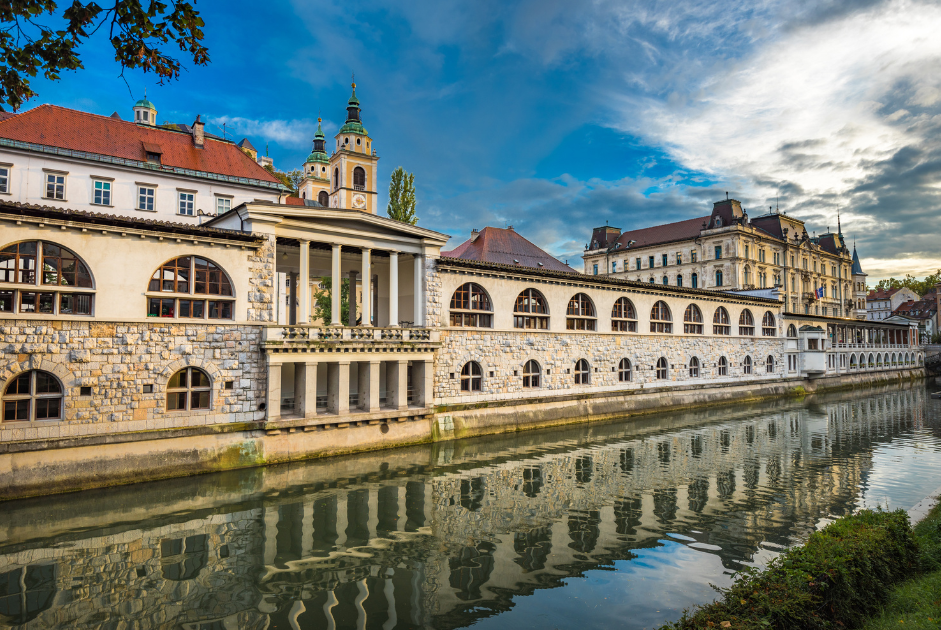
Plečnik’s unique architecture of the Central Market
The Ritual of the Market
As we wander through the Central Market, we see Plečnik’s genius in the ordinary. He didn't view a marketplace as a utilitarian grocery stop; he saw it as a grand civic ritual. His long, elegant colonnade along the riverbank gives the act of buying bread or seasonal herbs a sense of dignity and grace.
When we stand under those columns on our Detour, we aren't just looking at stone and mortar. We are discussing the psychology of community. Plečnik used classical pillars and open-air spaces to ensure that the market remained the "social anchor" of the city - a place where the professor, the farmer, and the traveler all meet on equal ground. It is a masterclass in how architecture can preserve a culture’s heartbeat.
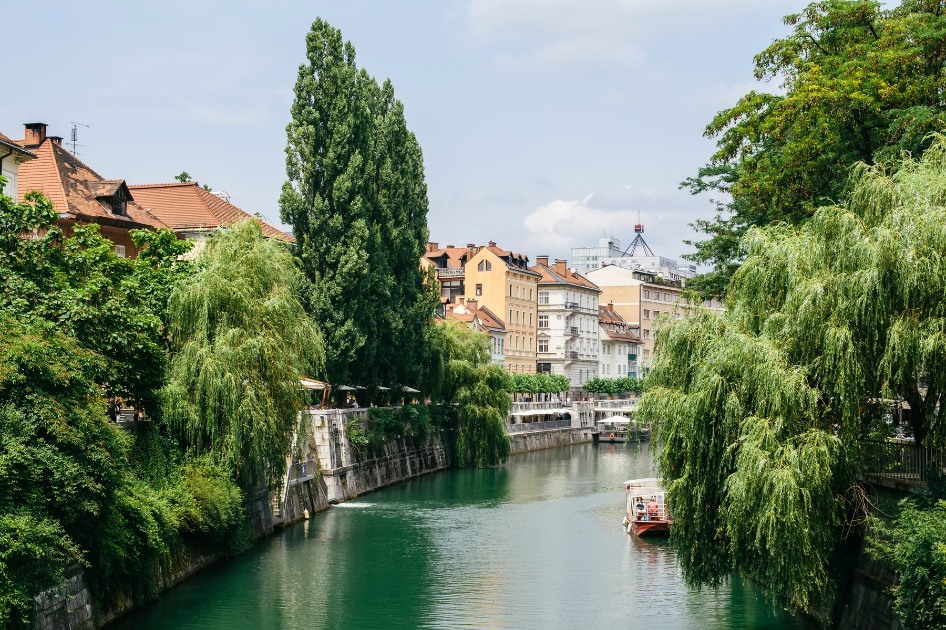
Thoughtfully placed weeping willows line the Ljubljanica River
The Art of the Embankment
Perhaps Plečnik’s greatest gift to Ljubljana was his treatment of the Ljubljanica River. He lined the banks with weeping willows, tiered stone steps, and perfectly placed benches, turning the waterway into the city's shared backyard.
This is where the "marinating" happens. On a Dressler Detour, we take the time to notice the specific language of these embankments - the way the lamp posts are placed just so, or how the trees provide "pockets of silence" in the middle of a capital city. Plečnik’s Ljubljana fits you like a well-worn coat; it is intentional, intimate, and deeply human.
The Souvenir of Belonging
Our journey through Slovenia begins in this "living room" for a reason. It sets the tone for everything that follows, from the quiet Alpine meadows to the rugged Karst plateau.
The takeaway isn't just a list of architectural terms or dates. It’s a realization that our physical environment can be an act of love. You return home looking at your own streets differently, asking yourself: Does this space invite me to stay, or does it tell me to move on?
In Ljubljana, the answer is always: Stay. There is a chair here for you.
Does your heart need a city built on a human scale?