
Standing in the Center of the World
There is a moment, upon stepping through the Imperial Gate of the Hagia Sophia, where the floor seems to fall away and the ceiling feels as though it has been suspended from the heavens by a golden chain.
For nearly 1,500 years, this structure has been the architectural heartbeat of Istanbul. To stand beneath its massive dome is to stand at the literal and metaphorical intersection of the East and the West, the ancient and the modern. It is the centerpiece of what we call a "palimpsest" - a place where history hasn't been erased, but rather written over, layer by layer, until the very walls tell a story of breathtaking complexity.
The Floating Light
When the Emperor Justinian completed this masterpiece in 537 AD, he famously proclaimed, "Solomon, I have outdone thee." He was referring to the engineering miracle of the dome, which appears to float on a ring of forty windows. On our journey through Istanbul, we take the time to notice how the light filters through those windows, catching the dust motes and illuminating the gold mosaics that have survived centuries of transformation.
In many world landmarks, you are ushered through in a hurried line. But here, we embrace the luxury of standing still. When you stop rushing, you begin to see the "seams" of history. You notice the six-winged Seraphim angels in the high corners of the ceiling, watching over the massive Arabic calligraphic medallions that were added when the building became a mosque. There is no other place on earth where the symbols of two of the world’s great faiths share the same space with such haunting, quiet dignity.
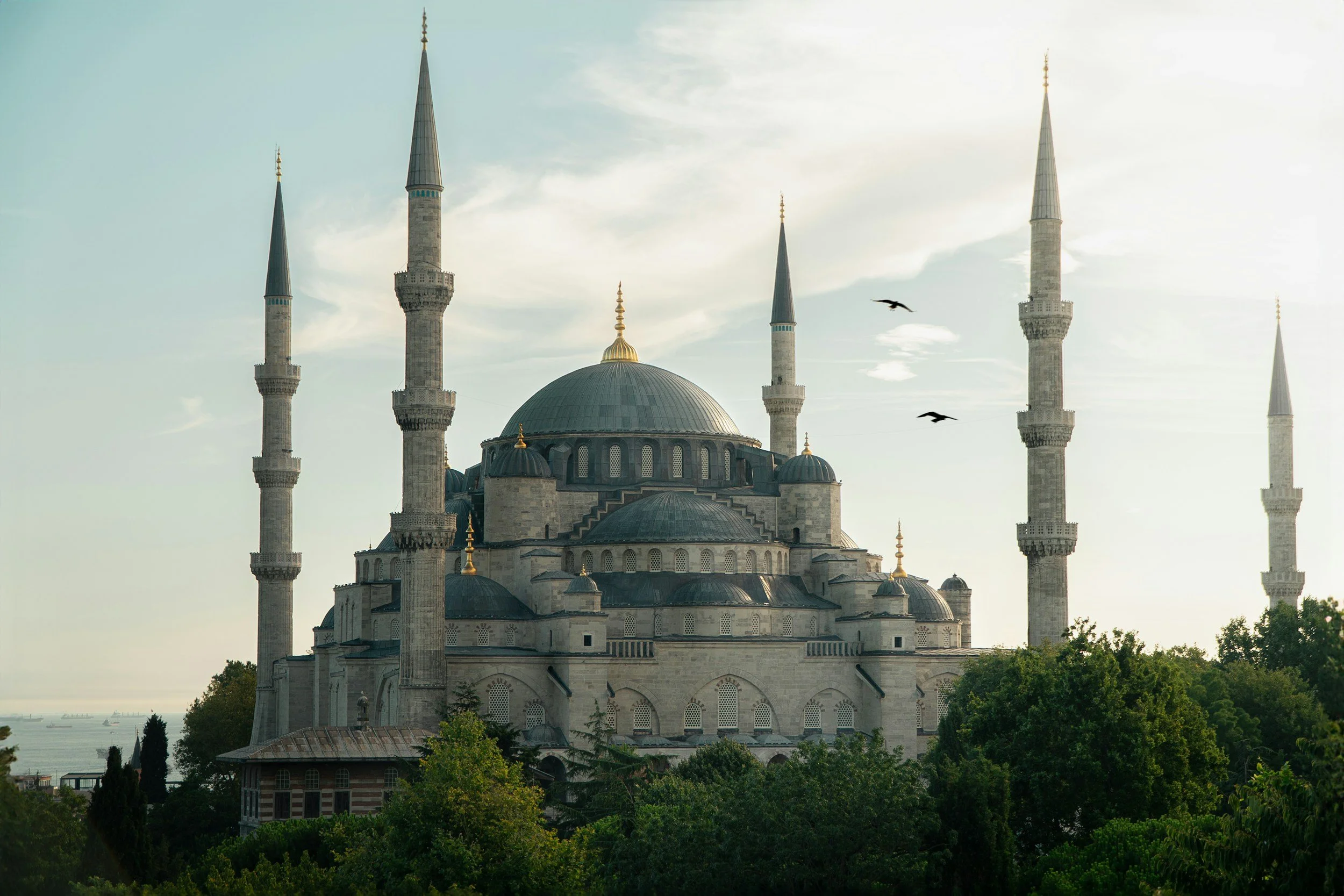
The historic Blue Mosque, an architectural miracle of its time
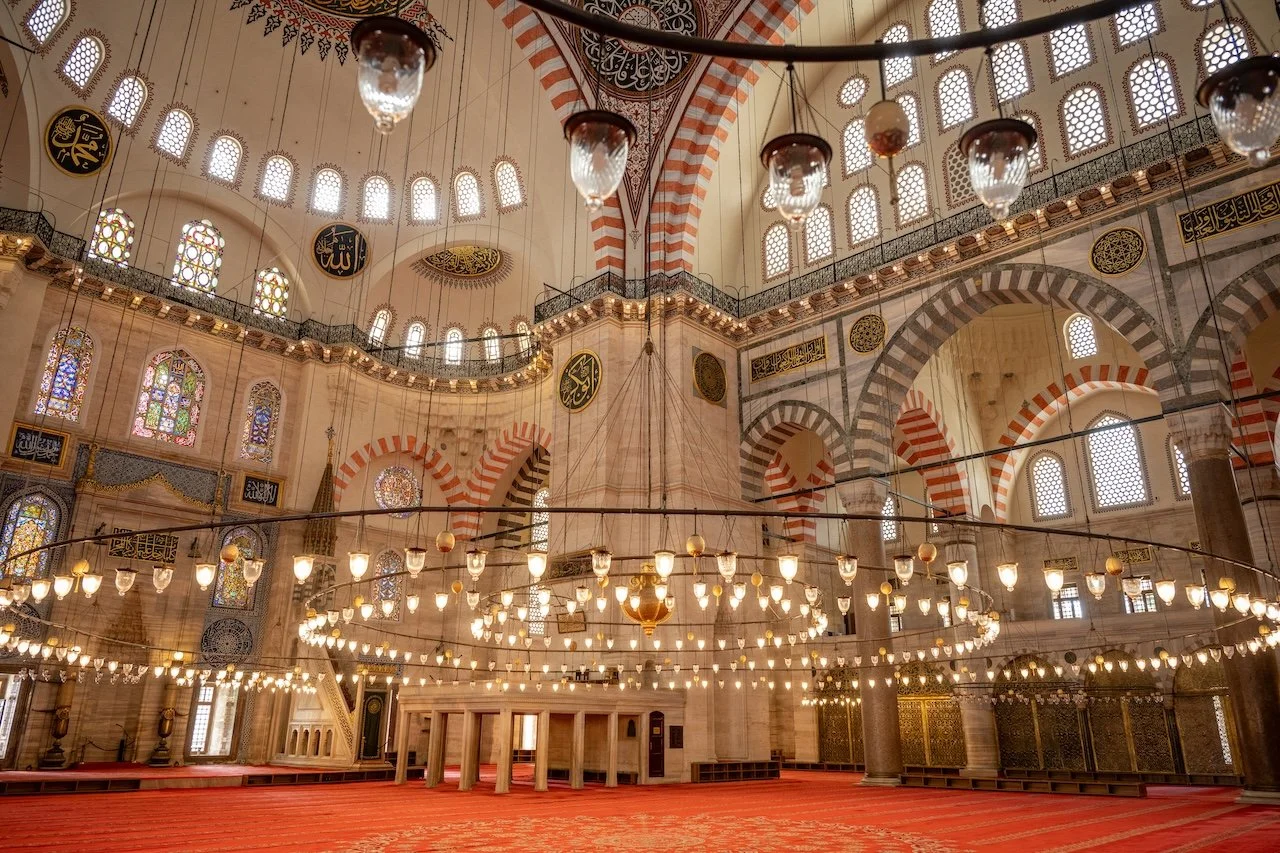
The beauty inside the Blue Mosque
A Conversation Across the Square
Just across the historic Hippodrome stands the Blue Mosque, the 17th-century "conversation partner" to the Hagia Sophia. While the Hagia Sophia represents the weight of the Byzantine past, the Blue Mosque - with its cascading domes and six slender minarets - represents the peak of Ottoman grace.
Inside, the atmosphere shifts. The light here doesn’t just fall; it glows blue, reflected off more than 20,000 handmade İznik tiles. By visiting these two icons together, we aren't just "seeing sights." We are observing a 1,000-year-old architectural dialogue about power, beauty, and the divine. We move between the heavy, ancient marble of the 6th century and the delicate floral patterns of the 17th, feeling the transition in the very air around us.
The Texture of the Palimpsest
Our 2026 tour is titled Palimpsest of Empires because Istanbul is a city of layers. You see it in the way a Roman column supports a Byzantine arch, which in turn stands adjacent to an Ottoman fountain.
This is why we start our journey in these grand spaces. They prepare us for the rest of Turkey- for the sun-bleached ruins of Ephesus and the cave cathedrals of Cappadocia. They teach us how to look for the "hidden" history. We learn that a building is never just a building; it is a record of human ambition, a witness to the rise and fall of empires, and a reminder that even the most solid stone is a living document.
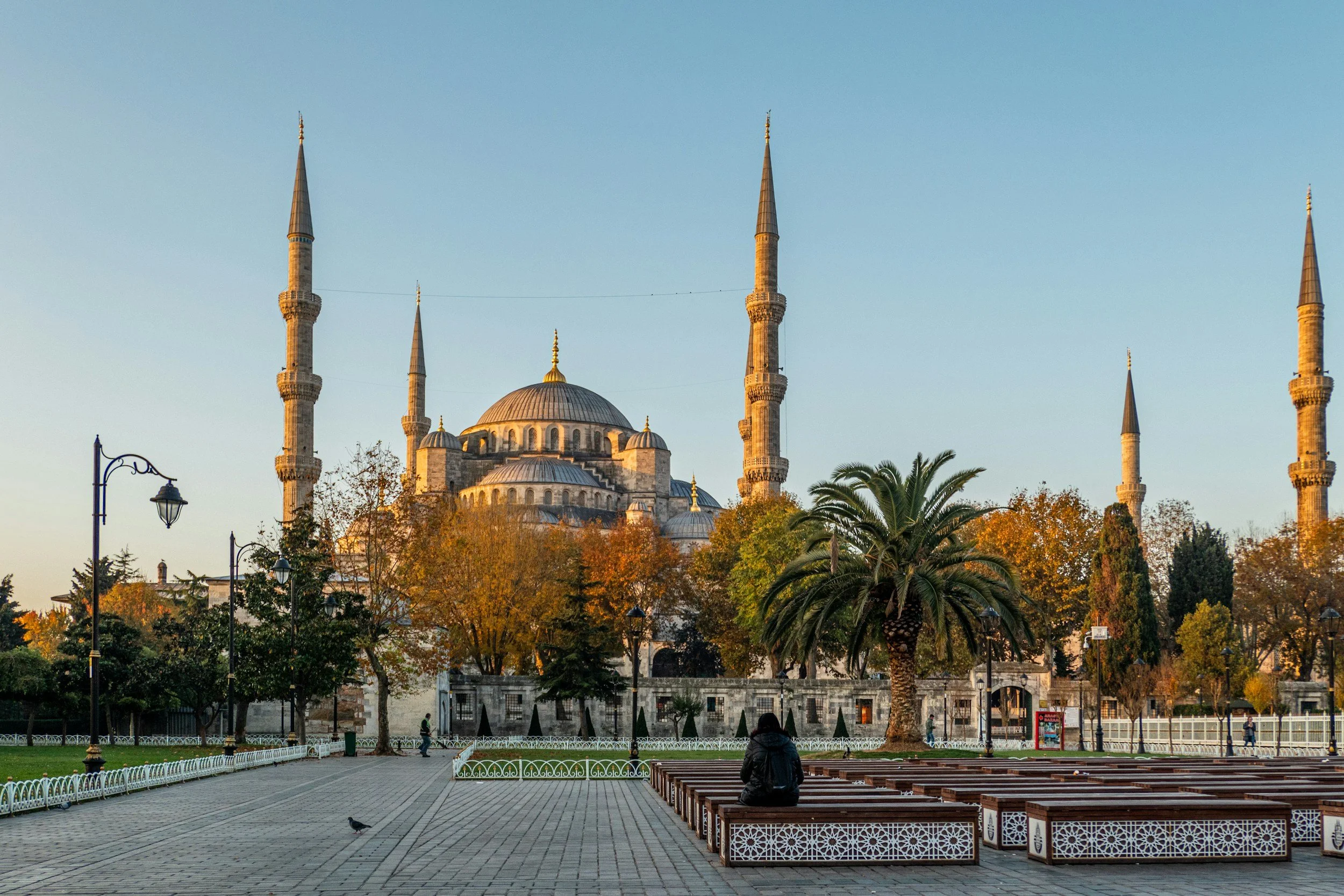
Golden sun rays shine on the Blue Mosque
Returning with New Eyes
As we wander from the silence of these domes into the vibrant, sensory chaos of the Grand Bazaar, the experience stays with you. You realize that to understand Turkey is to understand the art of the blend.
You return home not just with photos of a skyline, but with a deeper understanding of how cultures overlap, collide, and eventually find a way to coexist within the same four walls. In Istanbul, history isn't something you find in a book; it is something you stand beneath, looking up in wonder.
Are you ready to stand at the crossroads?
