
Into the Earth and Over the Clouds
A Romanian Detour
When most travelers think of Romania, whispered legends tend to rise first—werewolves, shadowed forests, gothic castles perched against stormy skies. It’s an alluring mythology, but it only brushes the surface.
We’re leaving those stories behind.
Because the real magic of Romania isn’t imagined. It’s elemental. It rises in the high alpine air of the Carpathians, disappears deep beneath the earth, settles into the rhythm of rural life, and ultimately reveals itself in places shaped by centuries of belief and meaning.
Our September 2026 detour isn’t about chasing sights. It’s about moving through layers—of landscape, culture, and time—in a way that asks you to slow down, look closer, and feel your place within it.
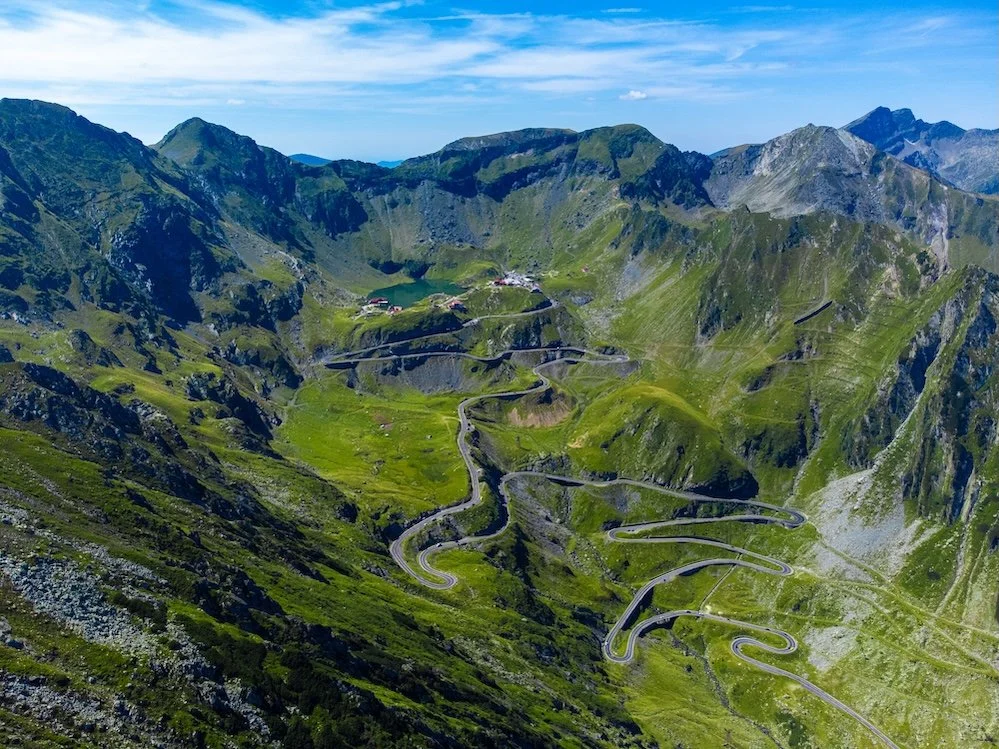
Transfăgărășan Highway serpentines from Bâlea Lake
Conquering the Transfăgărășan Highway
The journey begins with a quiet departure from Bucharest’s Belle Époque grace—ornate facades, wide boulevards—and a steady climb into something far more untamed.
The Făgărăș Mountains rise gradually, then all at once.
The day unfolds along the Transfăgărășan Highway, a road that feels less like infrastructure and more like an act of defiance against the landscape. It coils and bends in improbable curves, each turn revealing another sweeping view—green valleys dropping away, ridgelines layered into the distance, clouds drifting low enough to touch.
We’ll pause often. Not just for photos, but because the body insists on it.
At nearly 6,000 feet, the air at Bâlea Lake sharpens—cool, clean, carrying the quiet of high places. Nearby, Bâlea Waterfall crashes down in a rush that echoes off stone, a reminder that this landscape is still very much alive, still shaping itself.
If you found yourself drawn to the craftsmanship of Slovenia’s mountain worlds in our Slovenia Through the Hands of its Makers, this is something different. Larger. Wilder. Less polished. The kind of place that doesn’t ask to be admired so much as experienced.
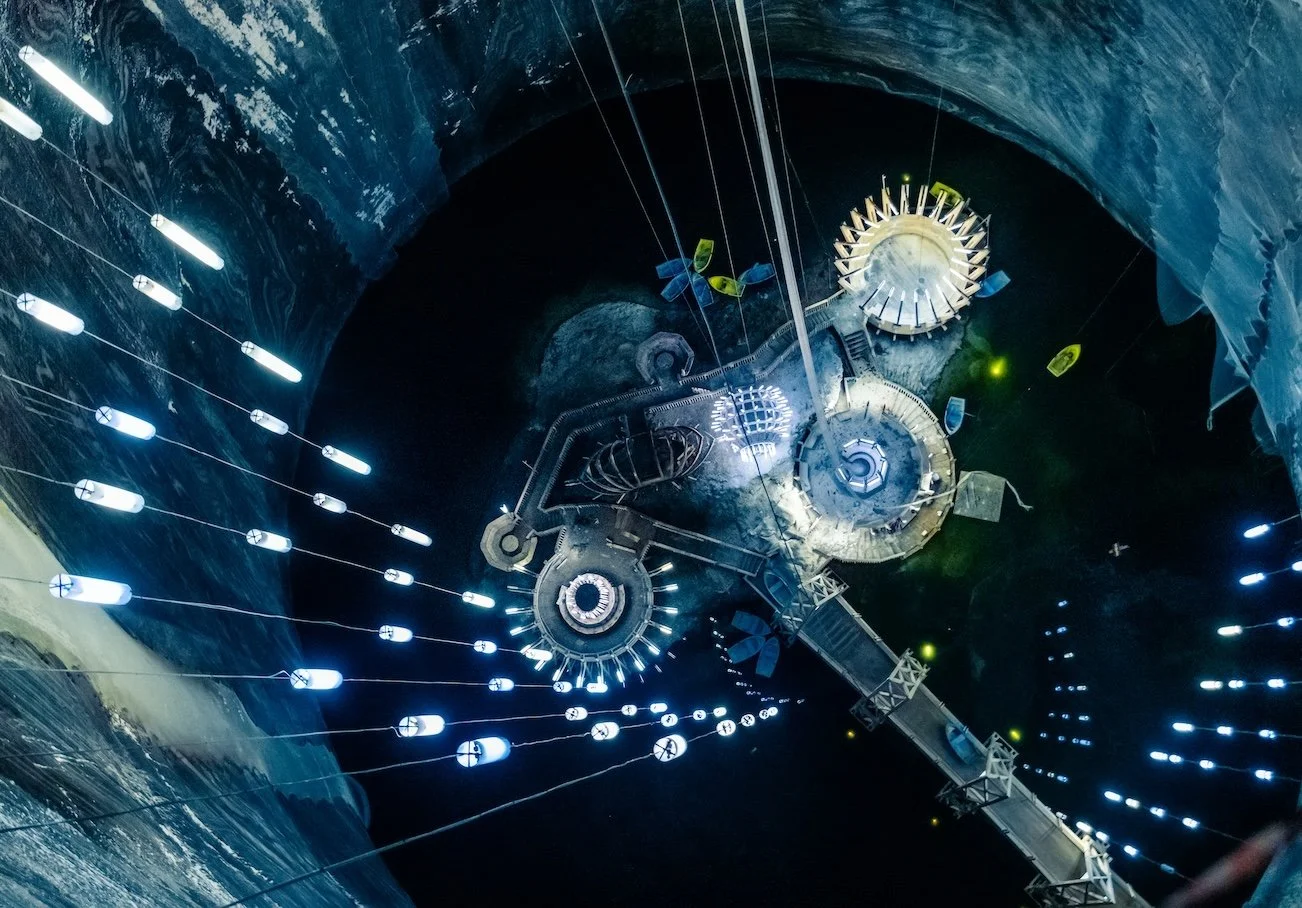
Turda Salt Mine
The Subterranean World: Salina Turda
And then, just as your body adjusts to altitude and open sky, we descend.
The entrance to Salina Turda is almost unassuming. But step inside, and the world shifts.
Down, down—350 feet beneath the surface—the air cools, the light softens, and space opens in unexpected ways. What was once an industrial site now feels vast and otherworldly, like stepping into a hidden cathedral carved from salt and time.
The walls shimmer subtly. Sound carries differently here—muted, echoing, almost suspended.
There’s a surreal quality to it all, as if you’ve crossed into a landscape not entirely meant for human scale. And then, eventually, you rise back up—returning to sunlight, to rolling hills, to the familiar textures of earth and sky.
That moment of reemergence stays with you. Grounding in the truest sense.
Slowing Down in Maramureş
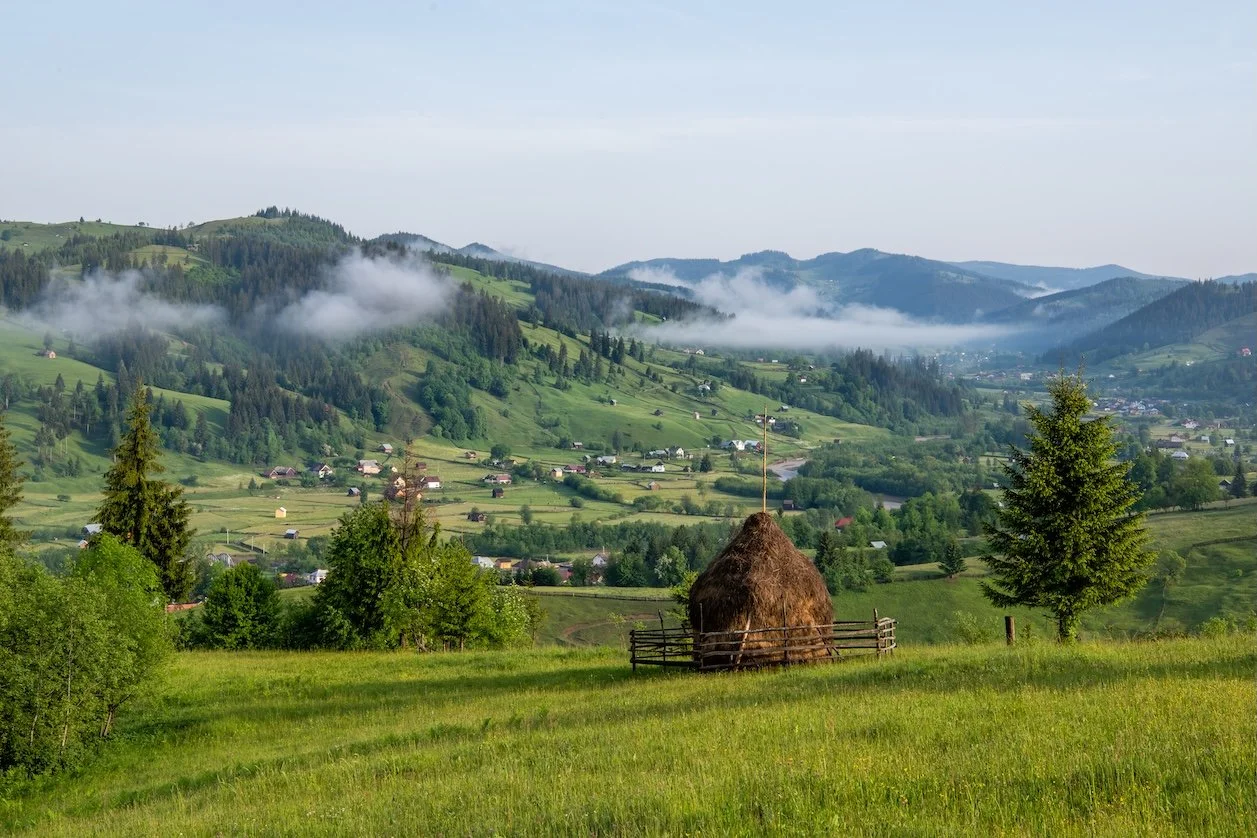
Traditional haystacks found in Breb
After the movement, the elevation, the descent, we arrive somewhere quieter.
Breb is not a place you rush through. It’s a place that gently recalibrates you.
In the Maramureş region, life unfolds at a different pace, one shaped more by seasons than schedules. Wooden gates—intricately carved, each telling its own story—mark the thresholds between homes and fields. Haystacks rise in soft, sculptural forms across the landscape, gathered by hand, just as they have been for generations.
This isn’t preservation for show. It’s continuity.
We’ll walk the lanes, meet local artisans, and spend time not just observing, but being present within a living culture that still holds a deep, reciprocal relationship with the land.
Here, the question shifts—from what are we seeing? to how are we moving through this place?
And the answer, more often than not, is: slowly, attentively, together.
Bucovina’s Painted Monasteries
By the time we leave Maramureş, something has already softened in us. The rhythm of rural life lingers, and Bucovina invites us into a different kind of attention, one shaped by centuries of devotion and storytelling.
Set into gentle hills and framed by gardens—often with roses climbing toward their walls—the painted monasteries reveal themselves gradually. And then, suddenly, completely.
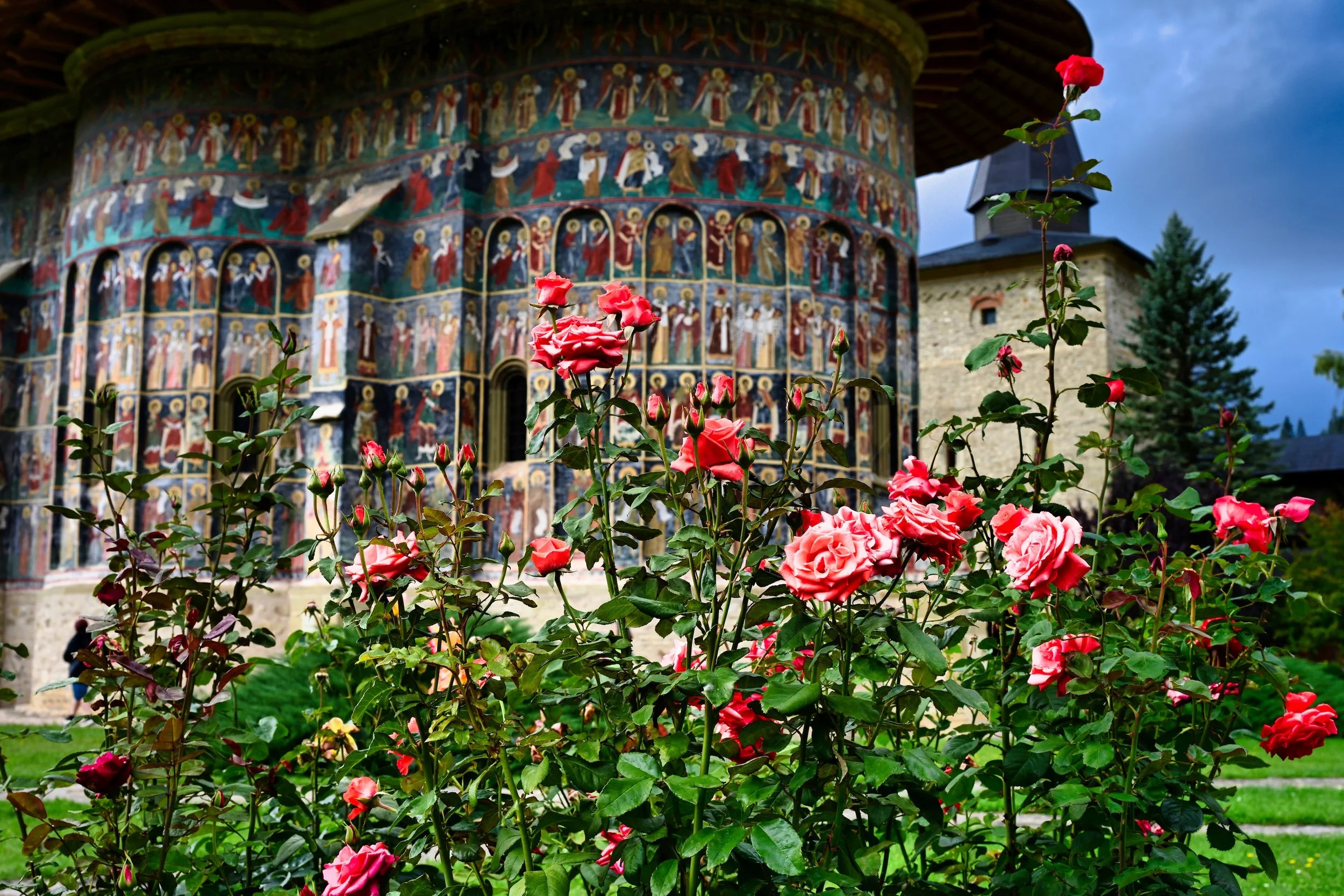
Voronet is the “Sistine Chapel of the East”
Dating to the 15th and 16th centuries, these UNESCO World Heritage sites are unlike anything else in Europe. Their exterior walls are covered—entirely—in vivid frescoes: saints, angels, and sweeping biblical narratives unfolding across surfaces that have endured centuries of weather, history, and faith.
But what stays with you isn’t just the color or the craftsmanship. It’s the intention behind them.
These were not decorative flourishes. They were stories made visible—meant to be read, contemplated, and shared by entire communities. At Voroneț, often called the “Sistine Chapel of the East,” the famous blue seems to hold the sky itself, while scenes of judgment and redemption stretch outward in intricate, layered detail.
We’ll spend time here slowly, letting the imagery come into focus rather than rushing to interpret it.
On our return, we’ll stop to explore another thread of Bucovina’s creative heritage: its distinctive black pottery. Watching artisans shape and fire these pieces offers a quieter, tactile connection to tradition—one that, like the monasteries, continues as part of daily life, not performance.
Ready to Explore the Rugged Heart of the Carpathians?
This detour runs September 6–18, 2026.
As always, we’re keeping the group small—because the kinds of experiences that matter most here can’t be rushed, and they can’t be scaled.
Join Christoph for a journey into the Romanian landscape—not just to see it, but to feel its rhythm, its history, and its quiet, enduring sense of place.
Join Christoph on a journey through the heart of the Carpathians
