
Sicily & the Long Memory of Myth
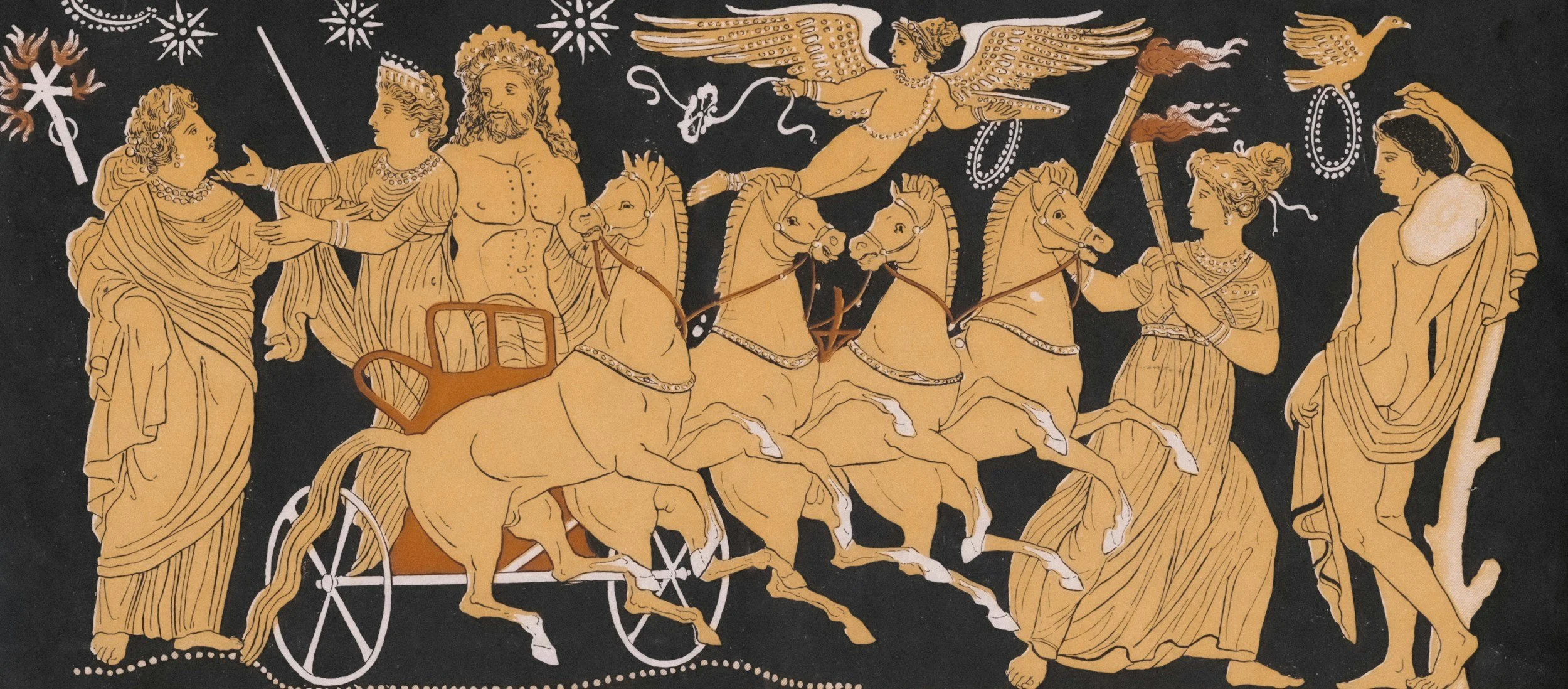
In Sicily, the story of Hades, Persephone, and Demeter shaped the seasons
Before Sicily was a destination, it was a story.
A place where the earth breathed fire, where winds were given names and tempers, where gods fell in love with nymphs and monsters lurked just beyond the headlands. Long before ferry schedules and hotel keys, Homer imagined this corner of the Mediterranean as alive—watchful, volatile, beautiful—a landscape that did not simply host travelers, but tested them.
The Odyssey didn’t just pass through Sicily and the Aeolian Islands. It lingered here.
And once you arrive, it’s hard not to feel why.
Odysseus’s journey is shaped as much by the land as by his own flaws. Sicily understands this kind of story. She is layered, contradictory, unruly. . . a place where civilizations arrived certain of themselves and left changed.
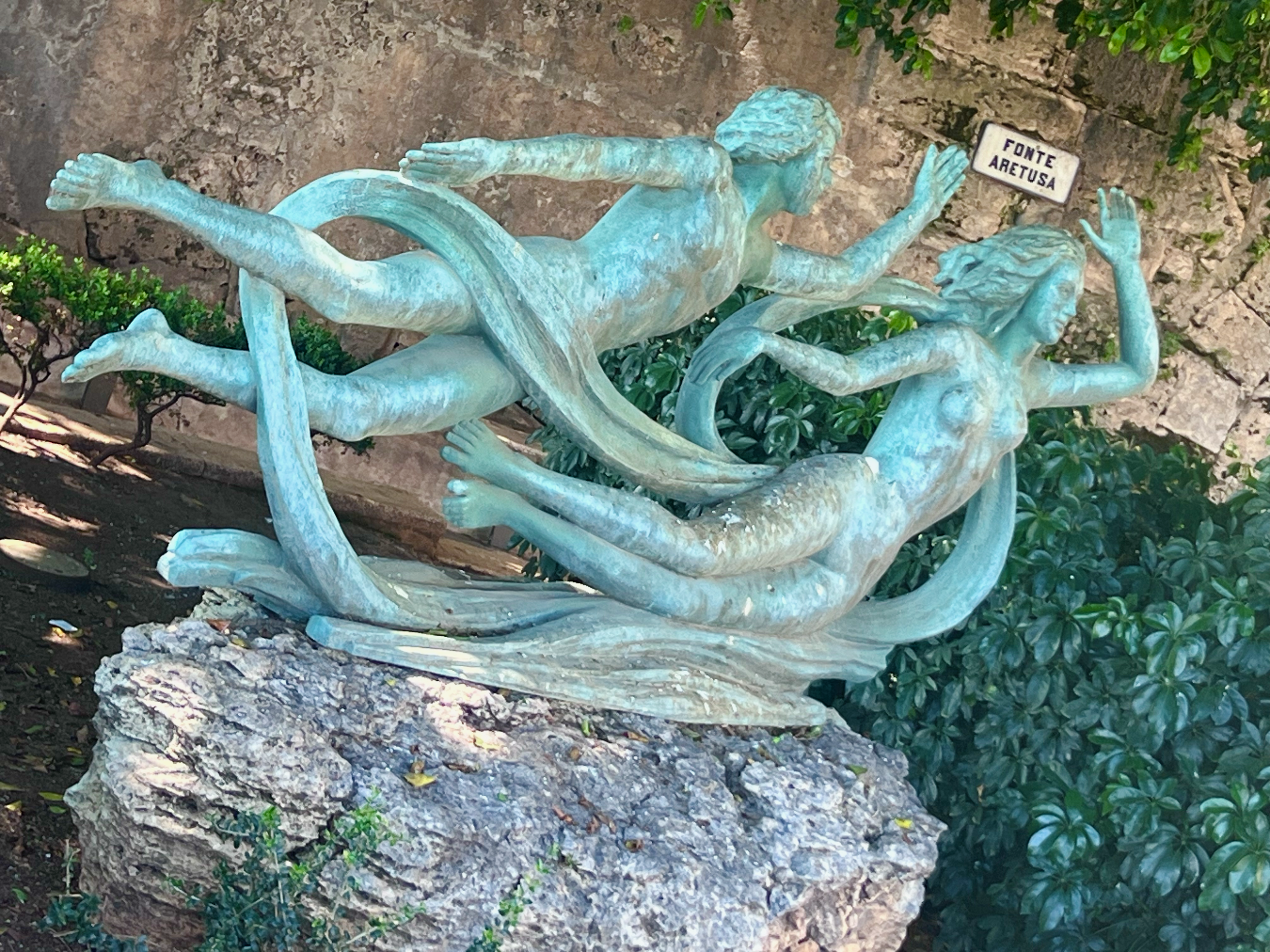
Alpheus and Arethusa in perpetual pursuit
Even the beginning feels mythic.
On the small island of Ortygia, freshwater bubbles up improbably beside the sea. This is the Fountain of Arethusa, a nymph who fled beneath the earth to escape the river god Alpheus, only to reemerge here, at the edge of Sicily, her waters mingling forever with salt and light.
It is a story about pursuit, transformation, and escape. Standing there, watching papyrus sway in a sea breeze, it feels less like legend and more like memory. Sicily has always been a place where boundaries blur: land and water, myth and history, past and present.
The farther you move across the island, the more the earth asserts itself.
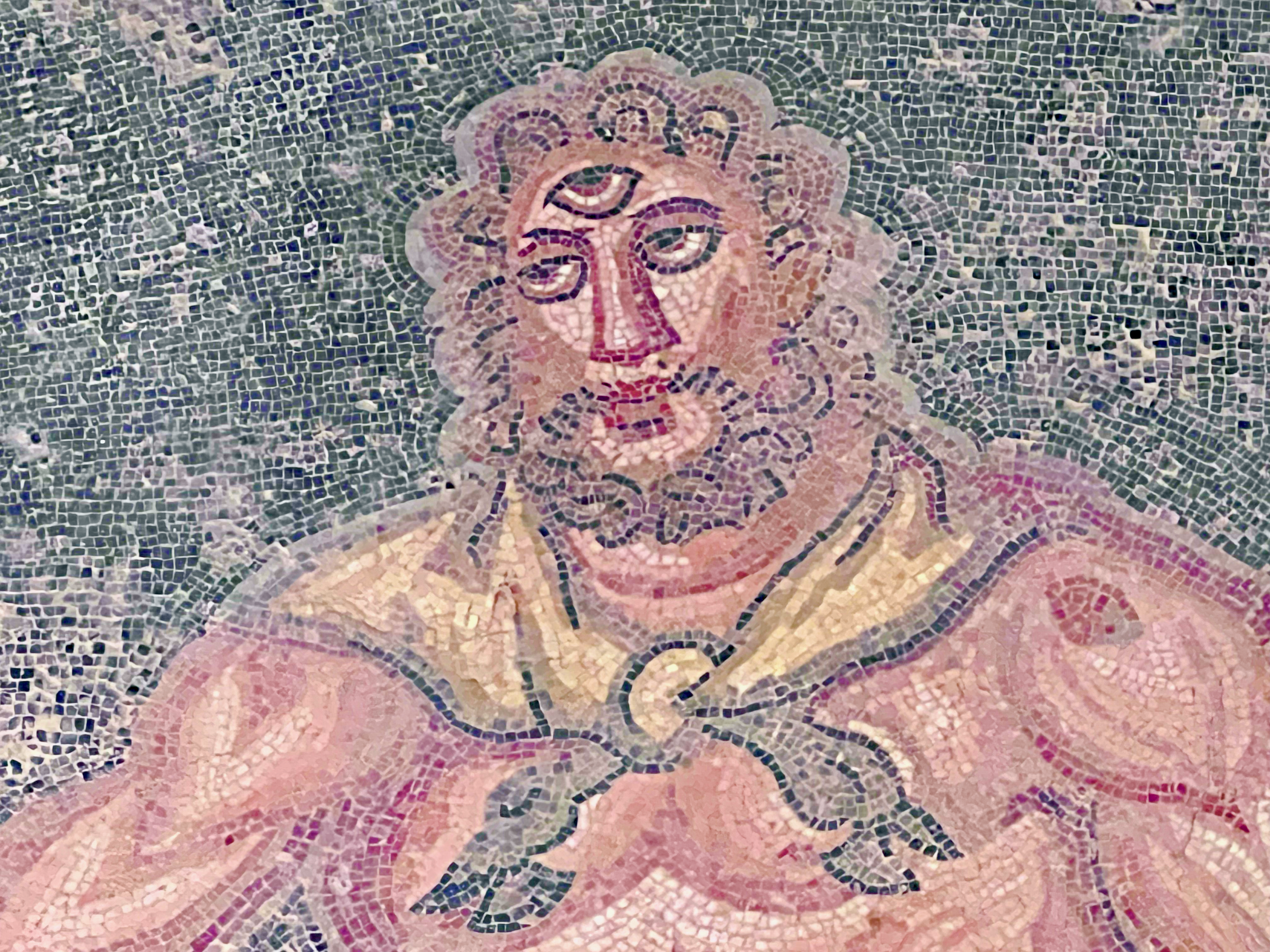
Polyphemus of Sicily: a metaphor of consequence
Mount Etna rises not as scenery, but as presence. The ancients believed this was the realm of Hephaestus, god of fire and creation, hammering thunderbolts beneath the mountain’s skin. But Etna was also home to something far less refined: the Cyclopes: one-eyed giants born of fire and stone.
It was here that Odysseus encountered Polyphemus, whose cave, carved into volcanic rock, became a lesson in hubris and consequence. The story lingers not because of the monster, but because of what follows: Odysseus’s clever escape, his fatal boast, and the curse that lengthened his journey by years.
Etna still feels like that kind of place. Magnificent. Unforgiving. A reminder that intelligence and arrogance are close cousins, and that the land always has the final word.
And then there is the sea — not open and generous, but narrow and unforgiving.
Between Sicily and the mainland lies the Strait of Messina, a stretch of water that looks deceptively calm. In Homer’s telling, it was here that sailors faced an impossible choice: Scylla on one side, Charybdis on the other.
Scylla, a many-headed monster lurking in the rocks, would snatch sailors from the decks. Charybdis, a living whirlpool, would swallow entire ships whole. To pass through meant choosing loss—deciding how to survive, knowing survival would not be clean.
Odysseus chooses Scylla.
Standing near these waters today, the myth still makes sense. Currents twist unexpectedly. The sea narrows. You feel, viscerally, that not every journey offers a perfect path, only the least devastating one.
It is one of the Odyssey’s most human moments. And Sicily, ever honest, holds it close.
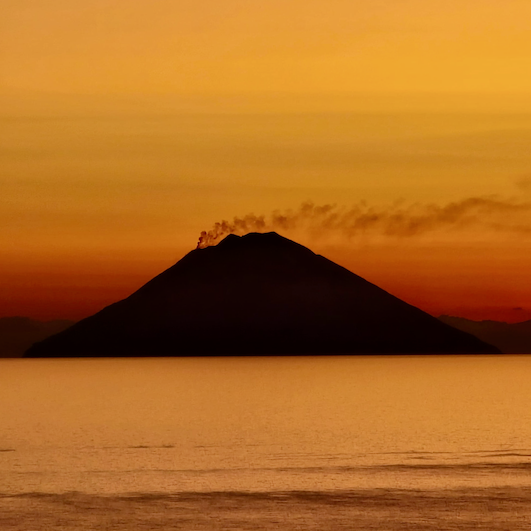
Stromboli island, the smoking giant
Beyond the strait, the world loosens again.
Off Sicily’s northern coast, the Aeolian Islands rise from the sea like fragments of an older world. They were named for Aeolus, keeper of the winds—a god who tried, briefly, to help Odysseus make his way home.
Given a bag containing every unruly gust, Odysseus sailed within sight of Ithaca before curiosity (or exhaustion, or mistrust) undid him. The winds were released. The sea reclaimed him.
Standing here, with the breeze tugging at linen and conversation alike, the myth doesn’t feel symbolic. It feels observational.
The wind does have moods.
Some days it moves softly, guiding boats and thoughts along. Other days it reminds you, firmly, who is in charge. This is not a sea designed to be mastered. It is a sea that asks for humility.
The Greeks understood something we often forget: landscapes have personalities.
Volcanoes were not hazards; they were living forces. Islands were not retreats; they were thresholds—places where something might happen, or unravel. Beauty and danger were never separate ideas.
That tension hums beneath Sicily’s surface.
Greek temples rise from fields where wildflowers now grow, their columns catching the same sun that once lit offerings to Athena and Demeter. Baroque cities shimmer with order and excess, rebuilt again and again after earthquakes and eruptions—proof that destruction here is not an ending, but a rhythm.
Like Odysseus himself, Sicily survives through adaptation.
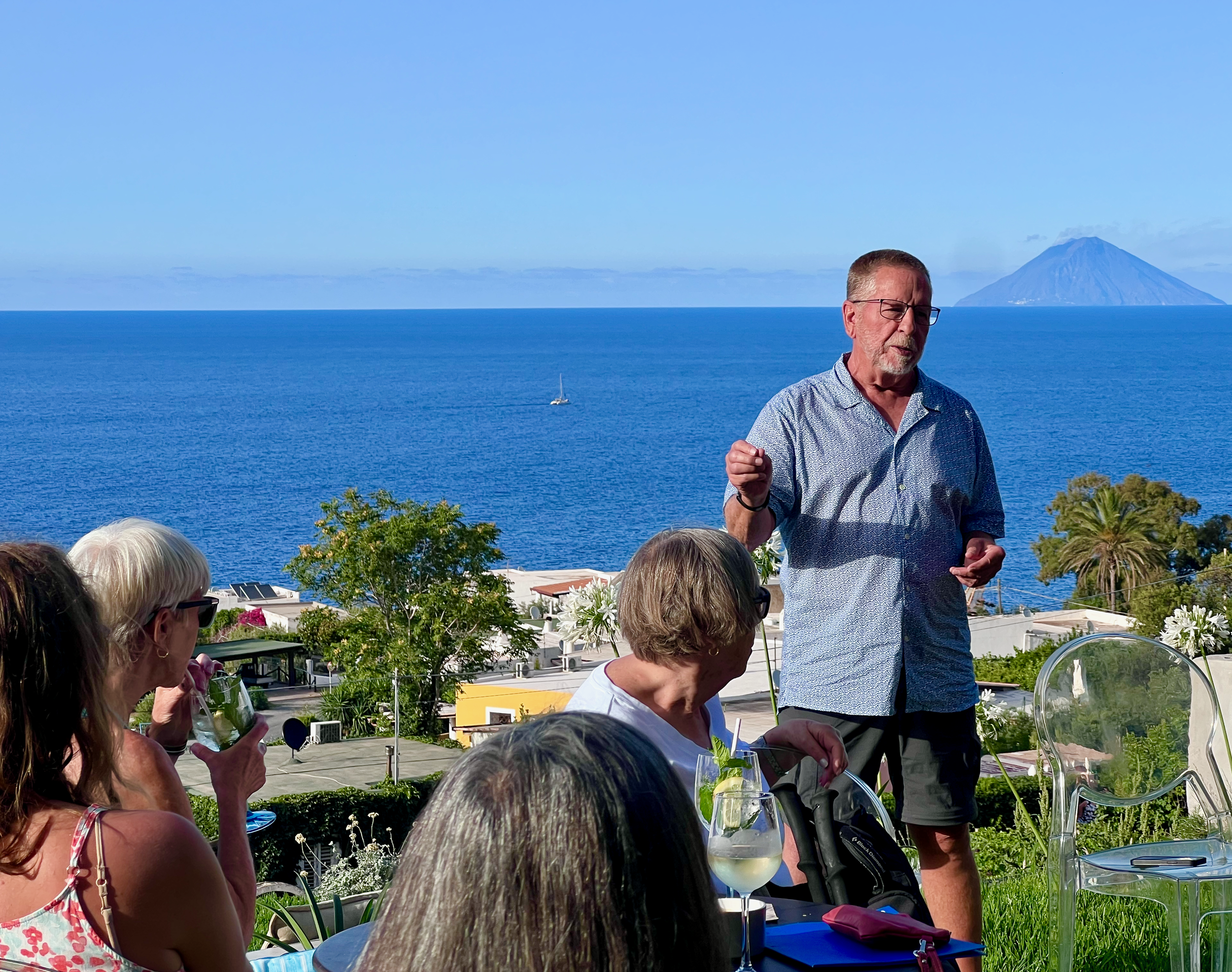
Mythological Happy Hour with Dr. Randy Stewart
And then there are the quieter myths — the ones never carved into stone.
The ritual of gathering around a table, lingering longer than planned.
The way wine tastes different when the land that made it is still warm.
The conversations that stretch into evening, untethered from urgency or outcome.
These are the moments Homer never wrote down — but surely understood.
Because the Odyssey is not really about monsters or gods. It’s about attention. About what happens when we move slowly enough to be changed by where we are.
Traveling through Sicily and the Aeolian Islands asks the same of us.
To notice the wind instead of fighting it.
To respect the fire rather than romanticize it.
To accept that some passages shape us precisely because they are narrow.
This is not a place for speed or conquest. It is a place for listening, for allowing mythology, history, and lived experience to blur together until you’re no longer sure where the story ends and your own begins.
An Invitation
Our journey through Sicily and the Aeolian Islands is not about retracing Odysseus’s steps, but about traveling with the same spirit—curious, attentive, open to being changed. We move slowly. We linger. We let story, place, and conversation guide us.
If you feel drawn to landscapes that remember, to travel that values meaning over momentum, you may find yourself at home on this journey.
Sometimes, the wind knows where you’re meant to go.
June 15-26, 2026
Questions? Call us at 801-718-4121.