
Life on the Edge
What Portugal Teaches us About Place, Patience, and Power
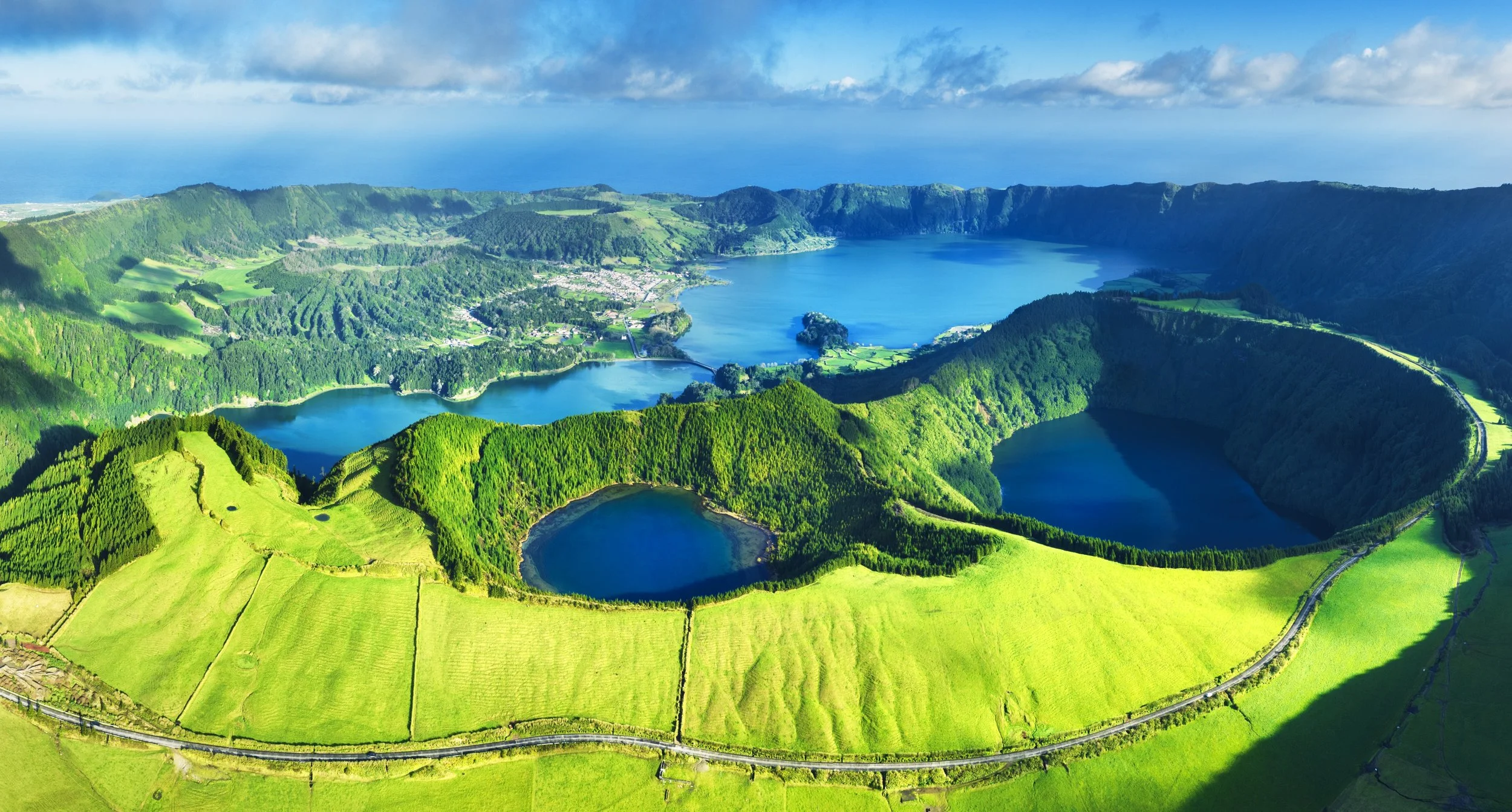
Color, legend, and geology meet at the edge of Sete Cidades twin lakes
Where Geography Sets the Terms
Portugal and the Azores are places shaped by edges: riverbanks, coastlines, fault lines—and by people who learned to listen to the land rather than dominate it. Here, geography has always set the terms. Rivers flood. Oceans claim lives. Volcanoes reshape the ground without warning. Music, food, architecture, and daily rituals all reflect lives lived close to forces larger than human control.
Together, Portugal and the Azores tell a story of life on the edge—of movement and stillness, departure and return, resilience and wonder. It’s a journey that doesn’t ask travelers to collect sights, but to notice how place shapes people, and how those edges can be some of the richest places to stand.

Before roads and rails, rabelo boats carried wine downriver
Porto: Work, Water, and Quiet Pride
That story begins in Porto, a city shaped by the tension between river and ocean. Nestled along the Douro river, Porto grew wealthy not through spectacle, but through work. For centuries, barrels of wine were loaded onto flat-bottomed rabelo boats and guided downstream by hand, navigating dangerous currents toward the Atlantic. The city’s nickname, Invicta—“unconquered”—reflects a long history of resistance and self-reliance, particularly during the 19th-century Liberal Wars.
Porto’s beauty is inseparable from effort: medieval streets stacked vertically along the riverbanks, azulejo tiles that protect buildings from damp Atlantic air, and a culture that values directness, durability, and pride without display.
The Douro Valley: Patience Written in Stone
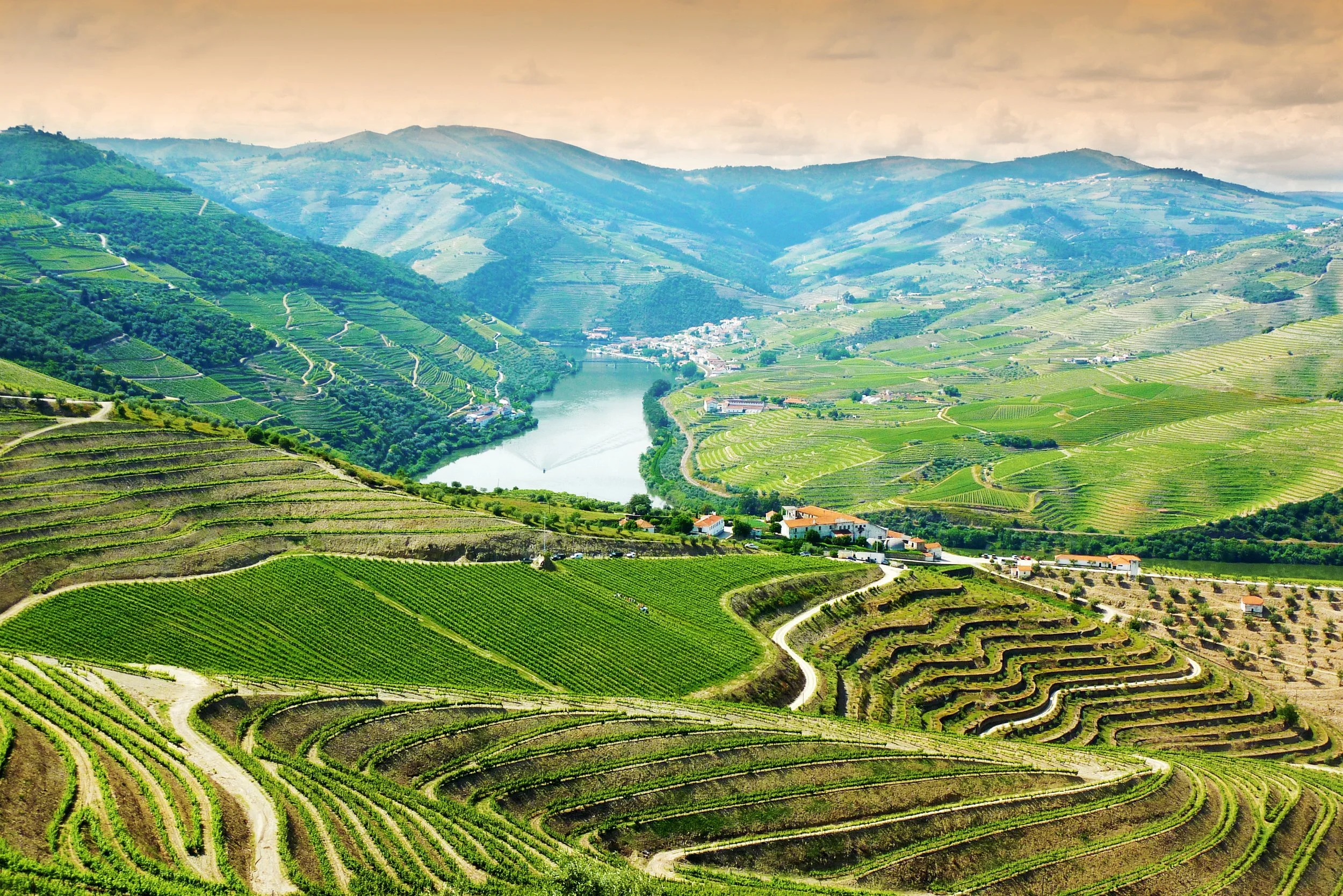
Stone terraces of the Duoro Valley
Following the river inland leads to the Douro Valley, where the land itself dictates how humans may live. Wine has been produced here since Roman times, but in 1756 (decades before Bordeaux) the Douro became one of the world’s first officially regulated wine regions, created to protect both quality and livelihoods from fraud and speculation.
The terraced vineyards—built stone by stone, often without mortar—cling to slopes so steep that machines are frequently useless, and much of the work is still done by hand. Generations of families carved these terraces directly into the hillsides, following the land’s contours rather than reshaping them. Spending the night here reveals something day trips can’t: a profound quiet once the river traffic fades, and the realization that this landscape is not scenic by accident, but the result of centuries of adaptation, patience, and physical labor.
Piódão: When the Land Decides
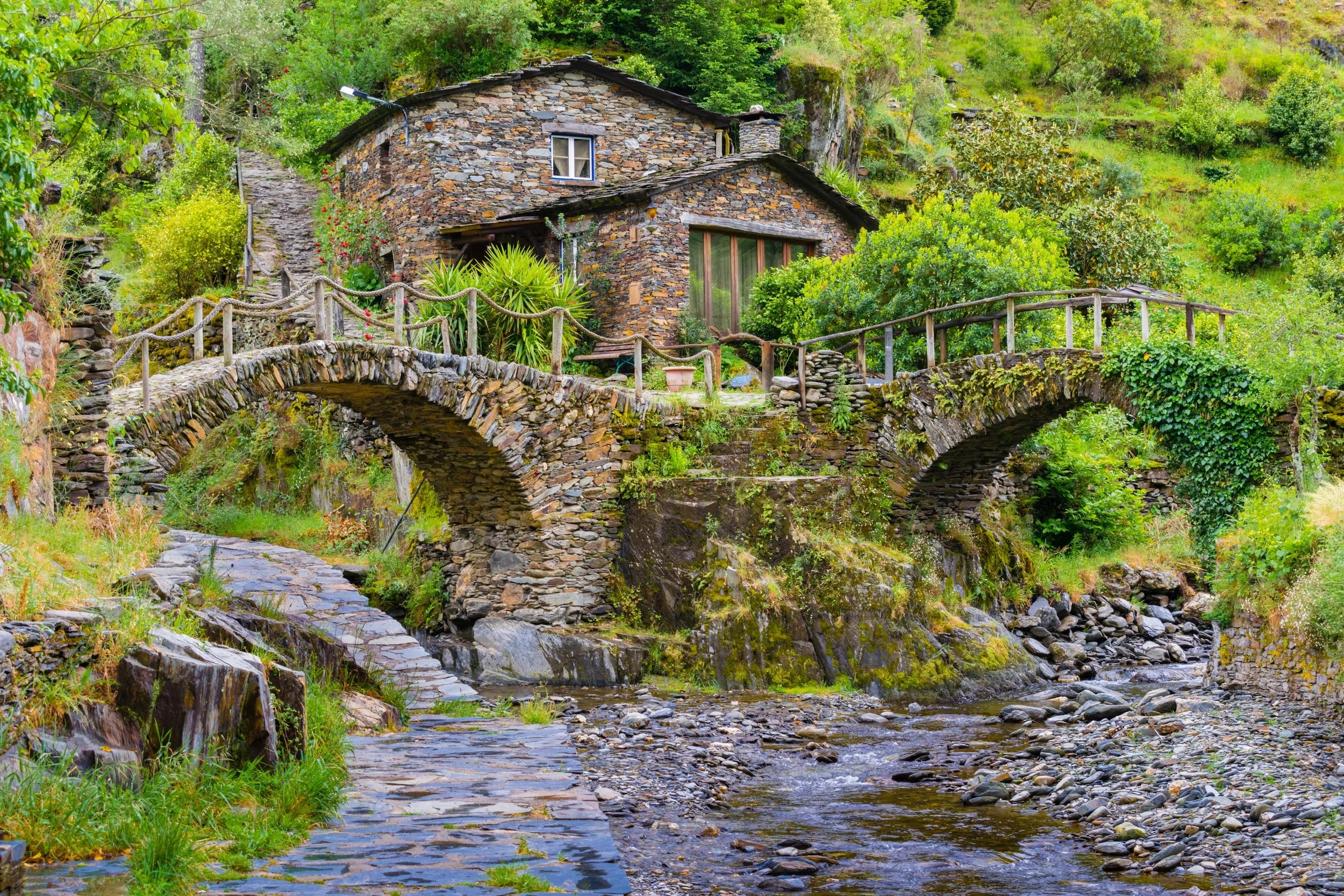
Schist village of Piódão, built from the mountain itself
Leaving the river behind, the journey turns inward to Piódão, a village that seems to grow directly out of the mountains. Built entirely from local schist stone, its slate-roofed houses blend almost invisibly into the Serra do Açor landscape, as if the village were an extension of the rock itself.
For generations, isolation defined life here. Roads arrived late, access was limited, resources were local, and self-sufficiency was essential. Piódão reminds us that Portugal’s history isn’t only maritime or imperial—it is also rural, interior, and shaped by places where survival depended less on ambition than on cooperation with the land.
Coimbra: Learning, Longing, and Song
That same relationship between place and expression comes into focus in Coimbra, home to one of Europe’s oldest universities. Founded in 1290, the University of Coimbra shaped Portugal’s intellectual and political life for centuries, and its traditions remain remarkably intact. Students still wear black capes, academic rituals unfold after dark, and a distinctive form of fado is sung beneath windows.
Fado is often described as Portuguese blues, but it is more accurately an expression of saudade—a deep, untranslatable longing tied to absence, departure, and memory. It exists because Portugal has long been a country of leaving: sailors who never returned, students who moved on, families divided by the sea. In Coimbra, fado is sung exclusively by men, traditionally by students, and never followed by applause. It is not performance, but reflection, giving voice to what cannot be resolved, only carried.
Nazaré: Living with the Atlantic
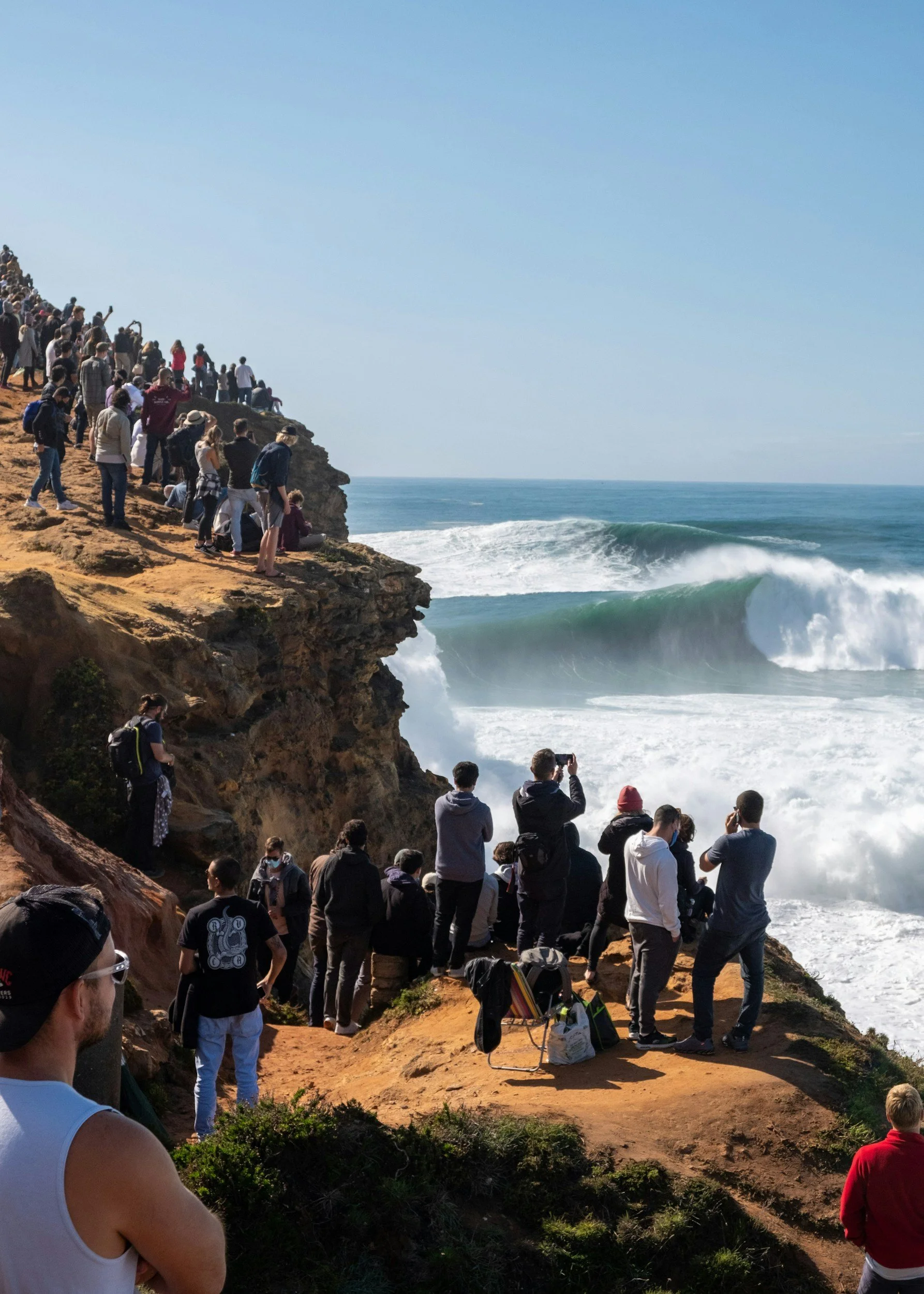
Waves at Nazaré, shaped by a canyon beneath the sea
Back on the coast, Nazaré brings the Atlantic fully into view. Once a fishing village defined by daily risk, Nazaré is now known for some of the largest surfable waves on Earth, made possible by one of Europe’s deepest underwater canyons, which funnels Atlantic swells directly toward shore.
The same sea that once fed families now produces waves taller than apartment buildings. Fisherwomen once dried fish on the beach; today, surfers arrive from around the world. Old and new coexist here, united by respect for forces that remain uncontrollable.
Lisbon: Collapse, Memory, and Reinvention
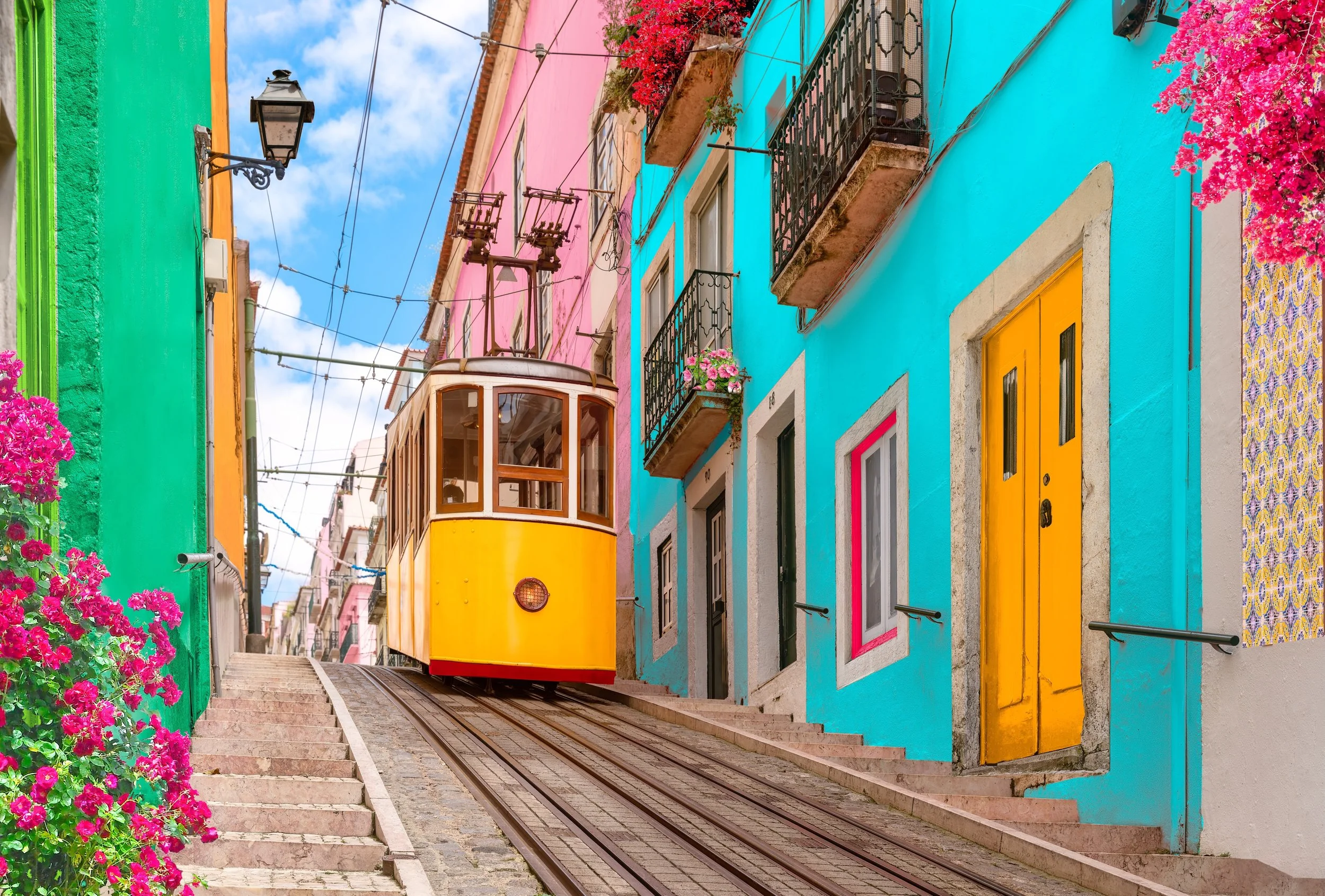
Lisbon’s colorful cable cars, moving with the land
In Lisbon, Portugal’s edge becomes philosophical. Facing the Atlantic, the city carries the weight of exploration, empire, catastrophe, and reinvention. The devastating 1755 earthquake flattened much of Lisbon and reshaped European thinking about nature, faith, and governance.
The rebuilt Baixa district became one of the world’s first modern urban plans, designed with seismic flexibility in mind. Today, Lisbon balances structure with improvisation—trams grinding uphill through narrow streets, miradouros (viewpoints) opening onto long ocean views, and daily life organized around light, air, and time to linger. It is a city shaped as much by collapse as by imagination.

Ilhéu de Vila Franca do Campo is shaped by eruption and the Atlantic
São Miguel: When the Earth Is Alive
Then the land gives way entirely.
São Miguel rises from the Atlantic—lush, volcanic, and unmistakably alive. Settled in the 15th century by farmers, fishermen, and those pushed to the margins of mainland society, the island developed in isolation, far from political centers and dependent on what the land would allow. With limited resources and no room for excess, daily life evolved in close conversation with geology itself. Here, the earth is never background. It steams, bubbles, and reshapes the landscape, reminding residents that stability is provisional.
In the island’s interior, volcanic forces are not controlled so much as accommodated. In places like Furnas, geothermal heat rises to the surface, shaping everything from architecture to cuisine. At Lagoa das Furnas, cozido is still cooked underground, lowered into the earth and left to time itself. It is a form of cooking that requires patience and trust—an everyday acknowledgment that nature, not the clock, sets the pace.
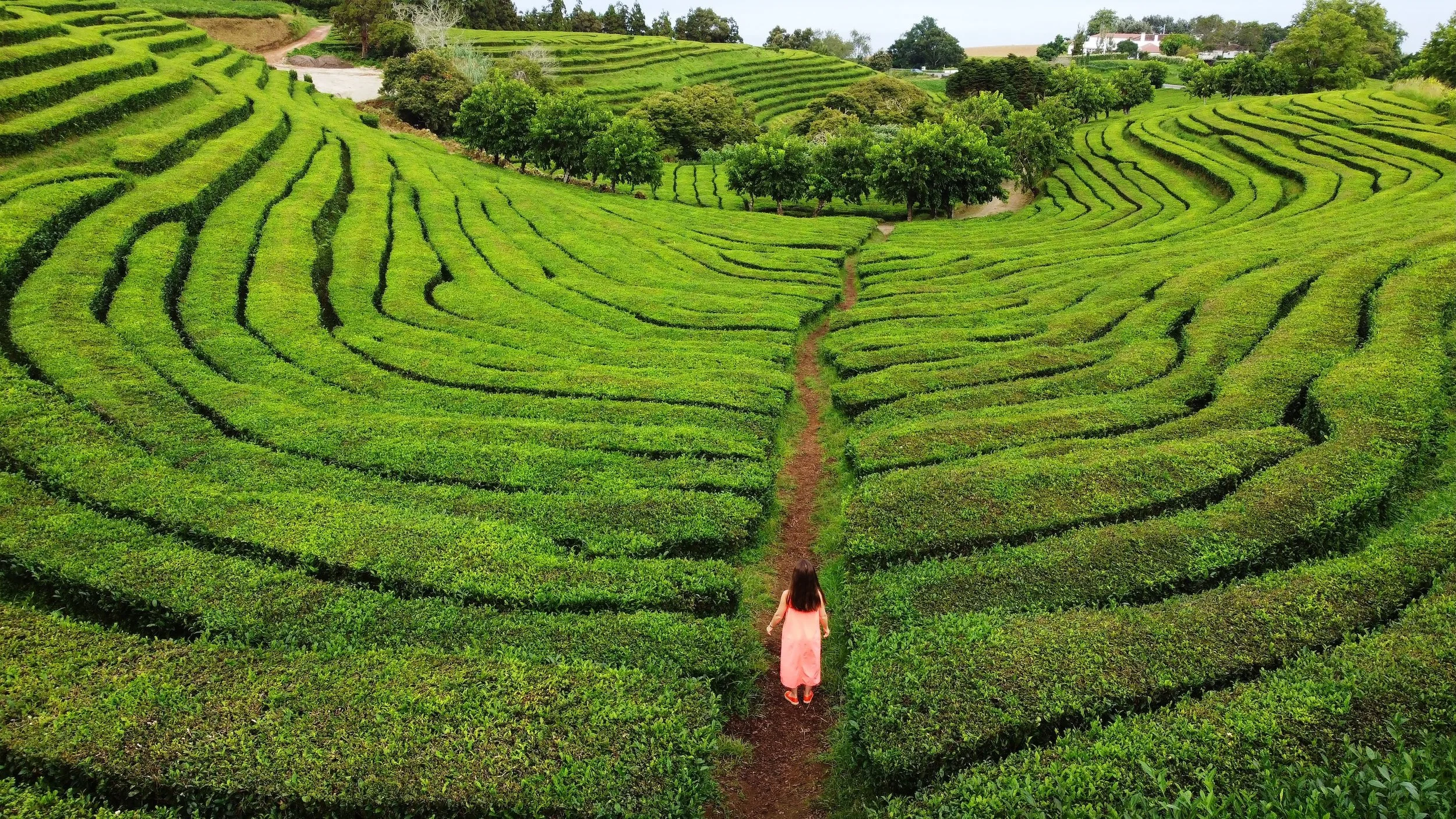
Gorreana is Eurpoe’s only tea plantation
This same relationship with the land extends outward. In the northeast, the Nordeste region feels almost primeval, where dense forests, waterfalls, and cliffs plunge toward the sea. Hydrangeas line the roads in summer—not planted for beauty, but originally grown to mark property boundaries in a landscape shaped by fog, rain, and steep terrain. At Gorreana, Europe’s only tea plantation has produced tea for more than a century without pesticides, relying on wind, rain, and volcanic soil rather than chemical intervention. Here, agriculture succeeds by cooperation, not force.
São Miguel’s edge is not only geological, but human. For much of the 20th century, the island was defined by departure. Economic hardship, isolation, and natural disasters pushed tens of thousands of Azoreans to leave for North America, turning harbors like Ponta Delgada into places of both connection and loss. That history of emigration still shapes island life today, visible in summer festivals timed to returning families, in houses built with remittances, and in a culture where hospitality carries the weight of absence.
Offshore, São Miguel’s position in the mid-Atlantic becomes clear. These surrounding waters are among the world’s richest for marine life, and whales have long been part of the island’s story—first as hunted resources, now as protected presences. The sea remains a force that sustains, threatens, and humbles in equal measure.
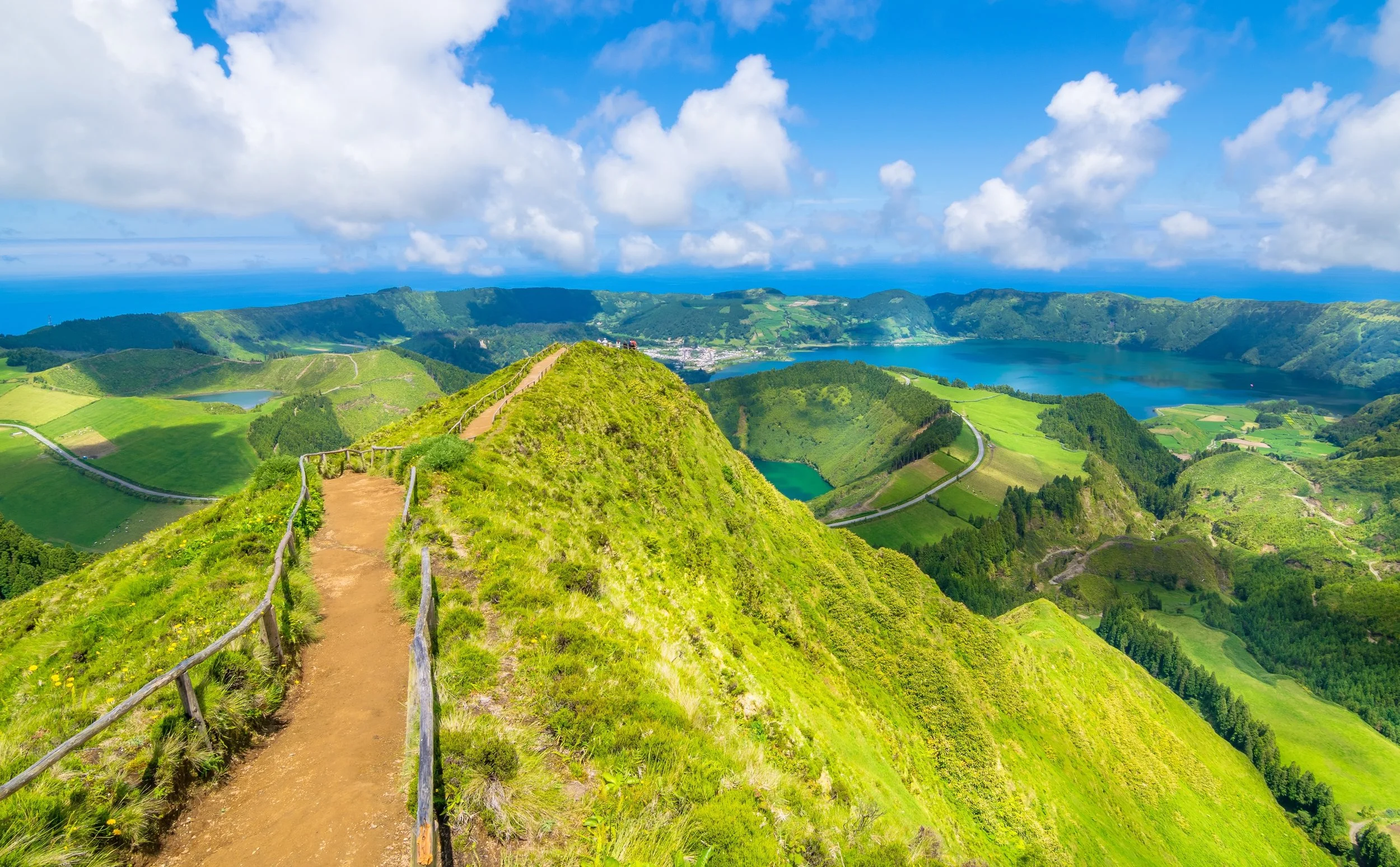
Miradouro da Boca do Inferno on the edge of Sete Cidades
In the island’s western reaches, the volcanic narrative comes fully into view. At Sete Cidades, twin crater lakes fill the bowl of an ancient eruption, their shifting colors tied to legend as much as light. Nearby, the jagged lava formations of Mosteiros show what happens when molten rock meets the Atlantic, forming a coastline that is dramatic, unstable, and still in motion.
At Lagoa do Fogo, the island seems to pause. This high crater lake, fed entirely by rain, sits suspended between earth and sky—accessible only when conditions allow. It is a reminder that here, access is never guaranteed.
What São Miguel teaches—perhaps more clearly than anywhere else—is that beauty is not the absence of force, but the result of living attentively with it. Eruption, pressure, isolation, and renewal are not metaphors here; they are facts of life. And from them emerges a culture rooted in restraint, hospitality, and quiet resilience.
It is a place that does not reward mastery. It rewards listening.
Standing at the Edge
What connects Porto, the Douro, Piódão, Coimbra, Nazaré, Lisbon, and São Miguel is not similarity, but orientation. These are places where people learned when to push forward, and when to yield. Where culture emerged as response rather than domination. Where listening mattered as much as ambition.
And this is the kind of travel we believe in: not consuming places, but learning how they work. Not rushing through landscapes, but letting them teach us how to stand at the edge—with humility, attention, and wonder.
If this way of seeing resonates with you, we’d love for you to join us. This is a journey shaped by access and relationships that exist only in a narrow window of time.
Portugal & the Azores: June 14-27, 2026:
Questions? Call us at 801-718-4121.