
Benvenuti a Casa
Finding Home in Southern Italy
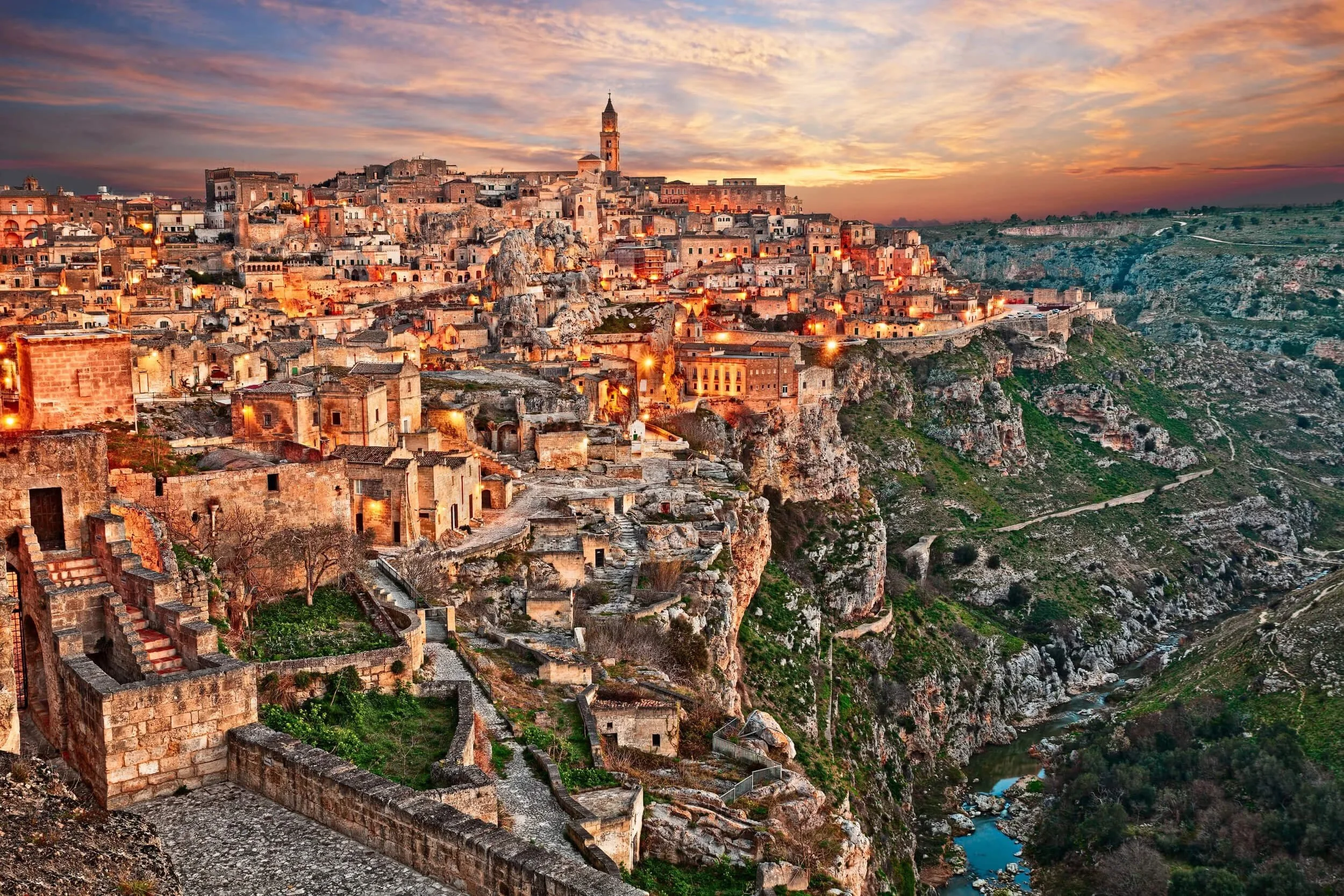
The Sassi of Matera are among the oldest continuously inhabited homes in the world
When we travel, we often learn about what people built to be seen: churches, palaces, monuments—all meant to convey power or permanence. But some of the most revealing stories of a place are found somewhere quieter and more intimate: where people came home at the end of the day.
Home is never just shelter. It is memory, habit, inheritance, and adaptation. It reflects what people value, what they fear, what they believe will endure, and what they know may not. In Southern Italy, ideas of home are written directly into the landscape, shaped by stone, climate, labor, and time.
Our Southern Italy Detour is, in many ways, a homecoming. Not because it returns us to our own pasts (although for some it may), but because it brings us closer to a universal human question: what does home mean, and how does it shape a people?
Matera and the Sassi: Home Carved from Stone
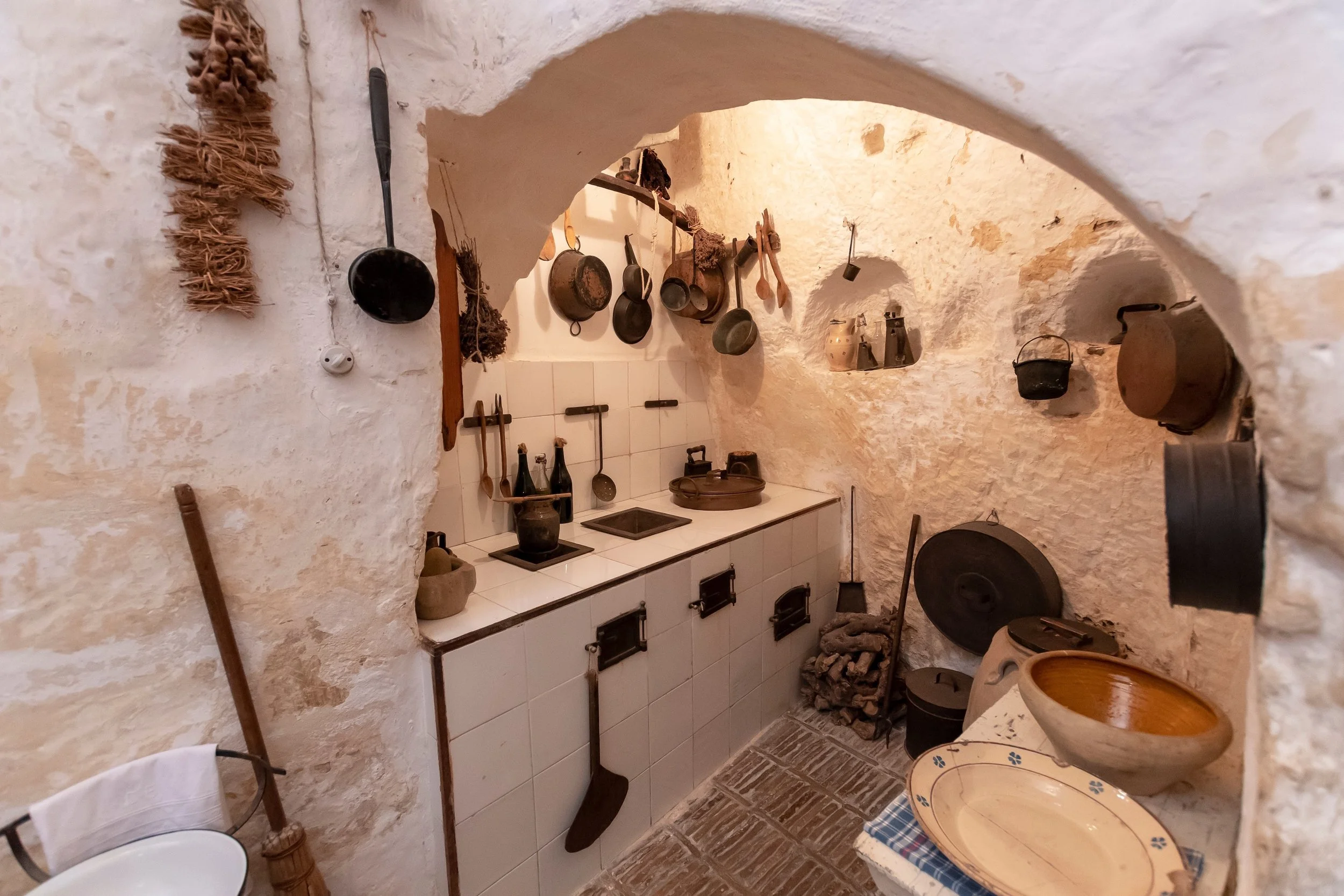
Typical Sasso (cave home)
The Sassi of Matera are among the oldest continuously inhabited homes in the world. The word Sassi simply means “stones,” but here it refers to a vast network of cave dwellings carved directly into the limestone ravine. Over thousands of years, these caves were expanded, layered, and reshaped into homes, churches, cisterns, and shared spaces.
These were not primitive shelters. They were highly adaptive homes, engineered to manage water, regulate temperature, and support communal life in a challenging environment. Families lived alongside animals. Rainwater was carefully collected and distributed through carved channels. Every element of the Sassi reflects ingenuity born of necessity.
In the mid-twentieth century, the Sassi were declared unfit for modern life. Beginning in the 1950s, families were relocated to newly built housing on the plateau above the ravine, leaving behind homes that had anchored the community for centuries. What had once been a living landscape was recast as a national embarrassment—a symbol of poverty rather than perseverance.
And yet, within a single generation, Matera’s story shifted dramatically. In 1993, the Sassi were designated a UNESCO World Heritage Site, and long-term leases at nominal cost were offered to encourage people to return and restore life to these spaces. Artists, hoteliers, and residents slowly moved back in, not to erase the past, but to re-engage with it. What was once deemed unlivable became newly valued as cultural inheritance.
That reversal invites an uncomfortable and necessary question: what do we decide makes a home worthy, and who gets to decide?
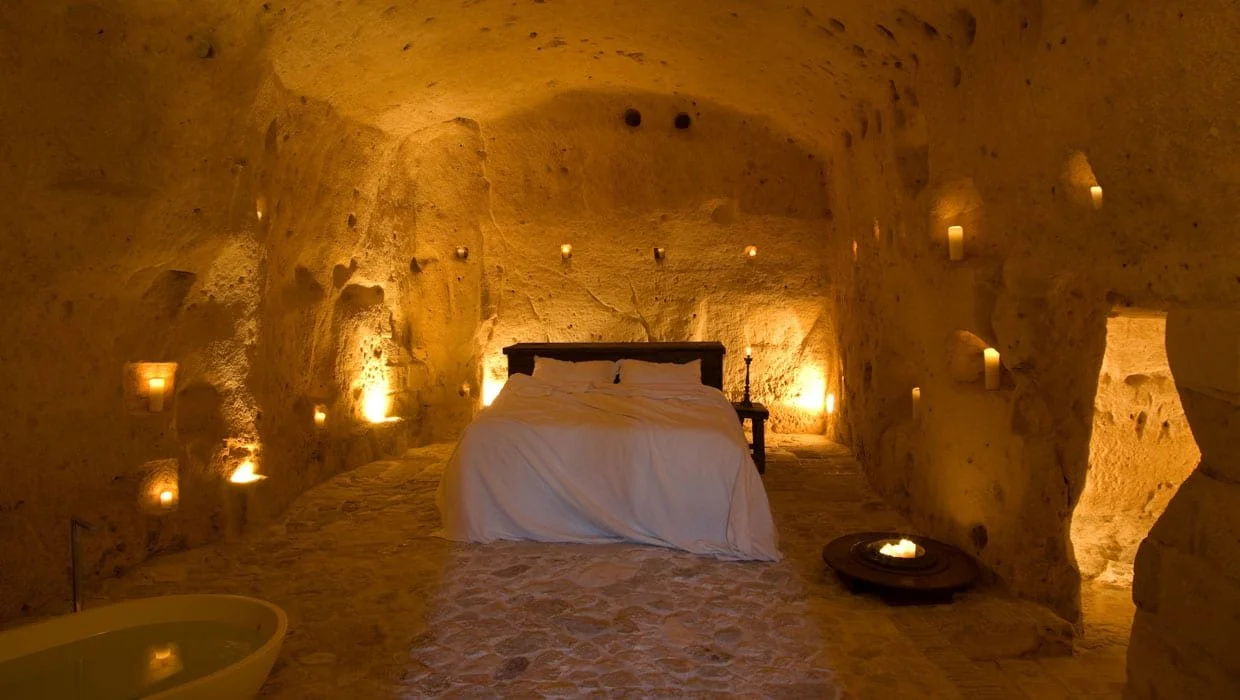
Our temporary Matera home at Le Grotte della Civitta
To spend the night in the Sassi is to sit with that question. Stone absorbs sound. Temperatures remain steady. Time moves differently. You begin to sense how continuity is not only understood intellectually, but felt physically—in light, silence, and scale.
For this reason, our time in Matera is not a passing visit. We stay for several nights within the Sassi themselves, in restored cave homes that retain their original character: stone walls, soft light, deep stillness. This is not history observed from a distance. It is history experienced from the inside—a way of understanding how home endures when people are allowed to return.
Puglia and the Trulli: Home Built to Adapt
If the Sassi were carved from the earth, Puglia’s trulli were carefully assembled from it.
Trulli are small, dry-stone houses constructed without mortar, recognizable by their thick limestone walls and conical roofs. Their design was precise and regulated, shaped by agricultural life and local law. Because they could be dismantled and rebuilt, trulli reflect a world in which permanence was never guaranteed and flexibility was essential.
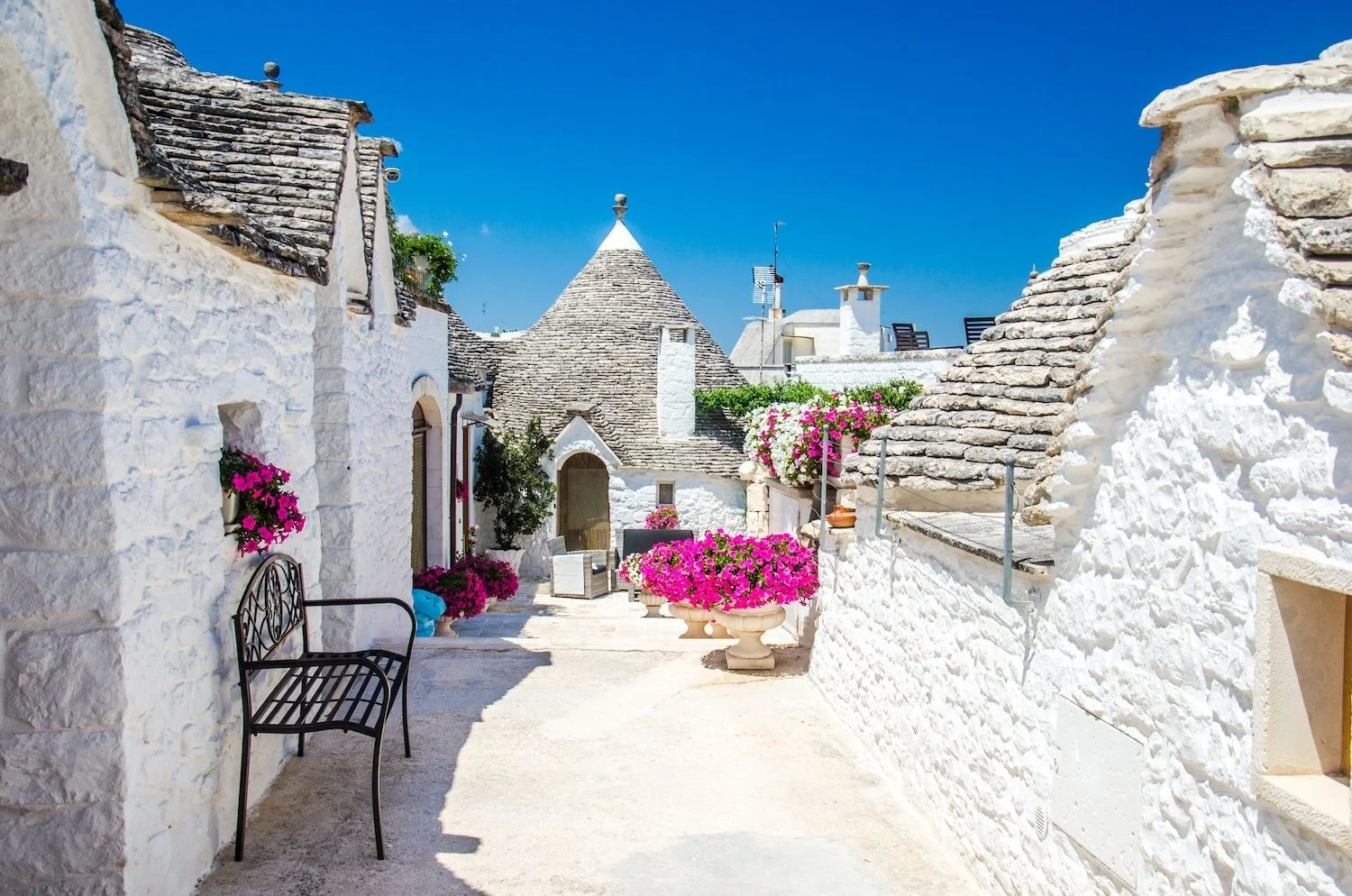
Conical Trulli houses in Alberobello
These were working homes — cool in summer, warm in winter, and closely tied to the rhythms of land and labor. Their modest interiors pushed daily life outward, reinforcing shared space and community connection. Symbols painted on the roofs carried protective, spiritual, and cultural meaning — reminders that home is as much belief and ritual as it is structure.
To sit inside a trullo is to understand adaptation at a human scale. The proportions are intimate. The stone holds the day’s temperature. Sound softens. Here, architecture, agriculture, and daily life feel inseparable.
For this reason, our time in Puglia includes gathering inside an original trullo to share local wine and specialty foods. It is a chance to taste the land that sustained these homes and to experience hospitality as it was once practiced: grounded, communal, and unhurried.
Craco: When Home Is Lost
Not all homes endure.
Craco’s story is not one of conquest or sudden catastrophe, but of slow unmaking. Perched on a fragile clay ridge in Basilicata, the town had long lived with instability beneath its feet. As early as the nineteenth century, landslides and erosion threatened homes and infrastructure. Flooding in the nearby valley worsened conditions, and seismic activity in the mid-twentieth century accelerated the damage.
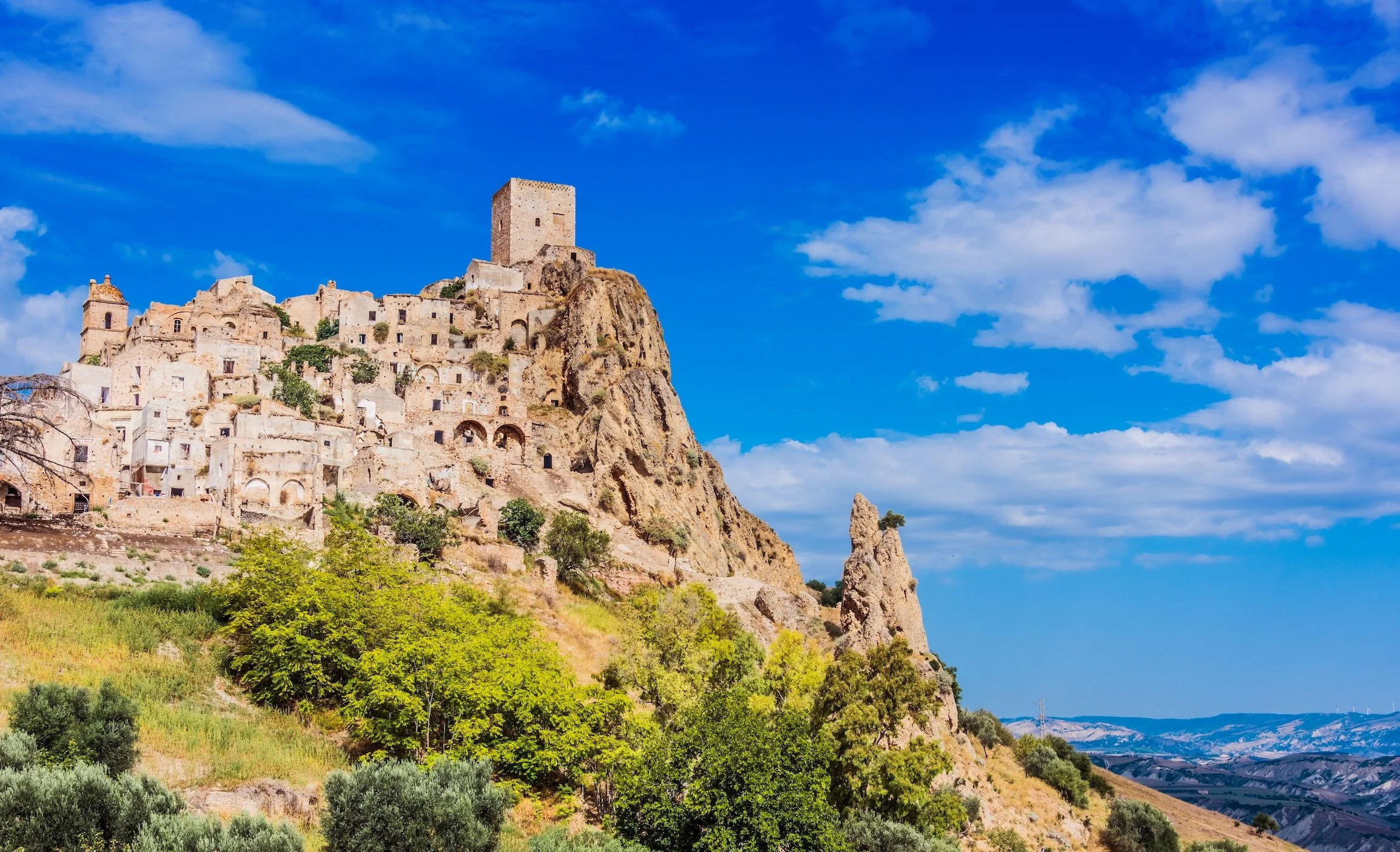
Craco stands largely intact but uninhabited
In 1963, after a particularly severe landslide rendered much of the town unsafe, residents were formally relocated to a new settlement in the valley below. Families left behind houses shaped by generations of daily life: kitchens, staircases, doorways worn smooth by habit—not because they wished to, but because staying had become impossible.
Today, Craco stands largely intact but uninhabited. Its streets do not bear the marks of violent destruction, but of abandonment: staircases that lead to silence, doorways opening onto sky, rooms emptied gradually rather than all at once. This is not a town frozen in a single moment, but one suspended in departure.
Craco asks us to reckon with a difficult truth: home is not only something we build—it’s something the land must allow us to keep. When that bond breaks, memory becomes the final dwelling place. For many, Craco resonates deeply, echoing stories of migration, displacement, and the quiet grief of leaving a home behind not by choice, but by necessity.
Herculaneum: Home Interrupted
Herculaneum offers one of the most intimate records of home from the ancient world—not because it was grander than its neighbors, but because it was preserved differently.
In the late summer of 79 CE, Herculaneum was a prosperous seaside town, home to merchants, artisans, and Roman elites who favored its calmer pace over nearby Pompeii. Homes here were built vertically, often with multiple stories overlooking courtyards and the Bay of Naples. Interiors were carefully finished, with painted walls, wooden furniture, storage lofts—spaces shaped not for display, but for daily life.
When Mount Vesuvius erupted, Herculaneum was not buried immediately in falling ash. Instead, hours later, superheated pyroclastic surges swept through the town, killing residents instantly and sealing buildings beneath layers of volcanic material. In a cruel paradox, that sudden violence protected what would otherwise have vanished: wooden doors and beams, furniture, food, even the impressions of textiles and beds.
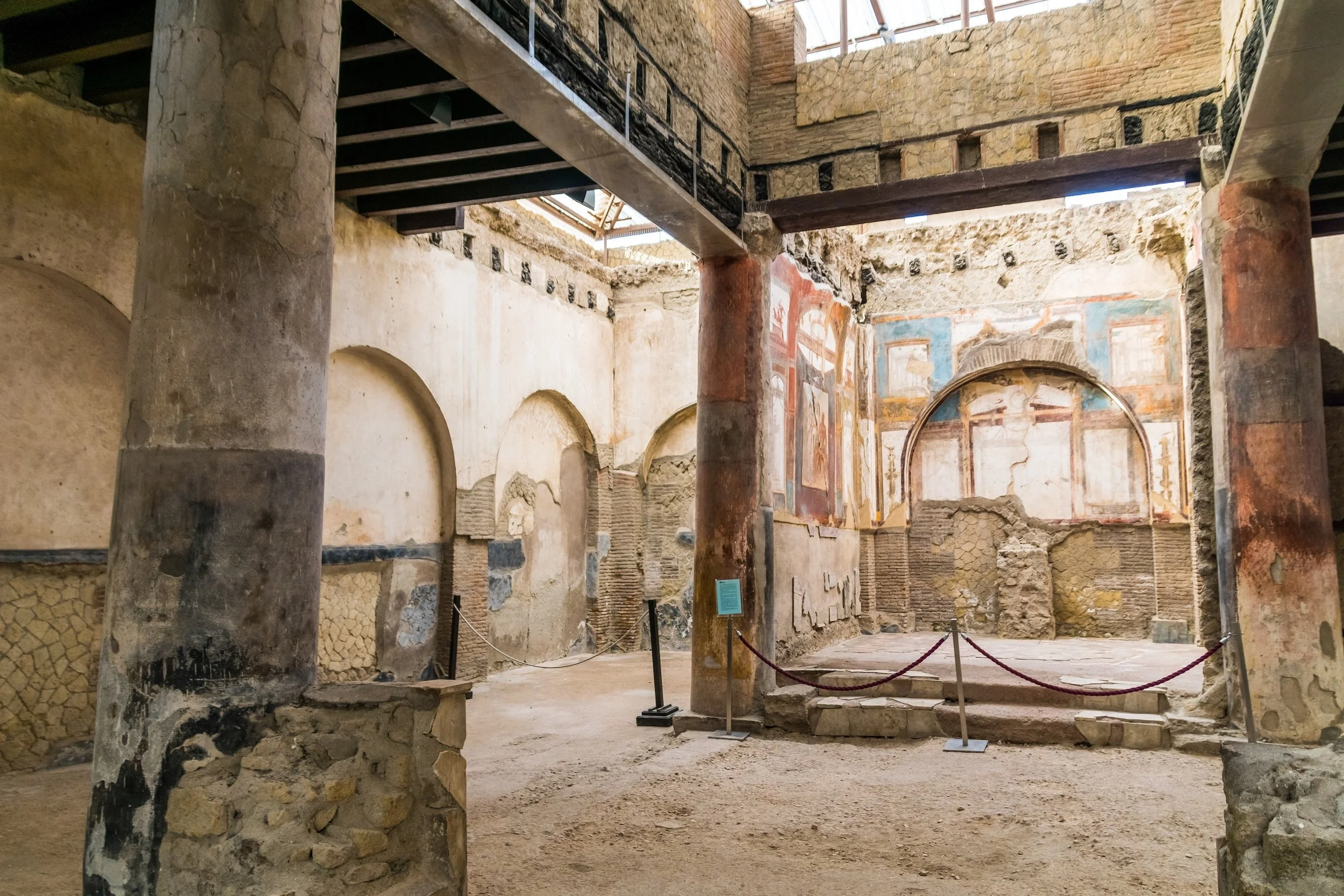
Roman house interior in Herculaneum
Walking through Herculaneum today feels less like entering a ruin and more like crossing a threshold. These were not public spaces designed for memory. They were homes. Kitchens still hold storage jars. Wall paintings remain vivid where light once filtered through upper windows. Staircases climb toward floors that once held bedrooms, private conversations, and the quiet rhythms of evening.
Life here was interrupted mid-routine. A door left open. A meal never finished. Objects set down with the expectation of return.
Herculaneum reminds us that home is where repetition creates the illusion of permanence. . . until it suddenly doesn’t. Its preservation is not intentional, nor heroic. It is accidental, born of catastrophe, and deeply unsettling in its intimacy. The people who lived here never imagined their homes would become history. And yet, in their sudden stillness, they offer us one of the clearest windows into how ordinary lives were lived—and how fragile even the most familiar sense of home can be.
The Amalfi Coast: Home as Aspiration
Along the Amalfi Coast, home takes on a different register—one shaped as much by desire as by necessity. Cliffside villas cascade toward the sea, their terraces oriented toward light, view, and arrival. Since antiquity, this coastline has drawn those with the means to choose beauty as a priority. Roman elites built maritime villas here and on nearby Capri, seeking both pleasure and remove from Rome’s scrutiny. Most famously, Emperor Tiberius withdrew to Capri in his later years, ruling from a complex of palaces, including Villa Jovis, perched high above the sea. Ancient historians wrote of excess and moral decline, but beneath the scandal lies something enduring: the coast as a place where power, privacy, and spectacle converged, and where home became a stage as much as a refuge.
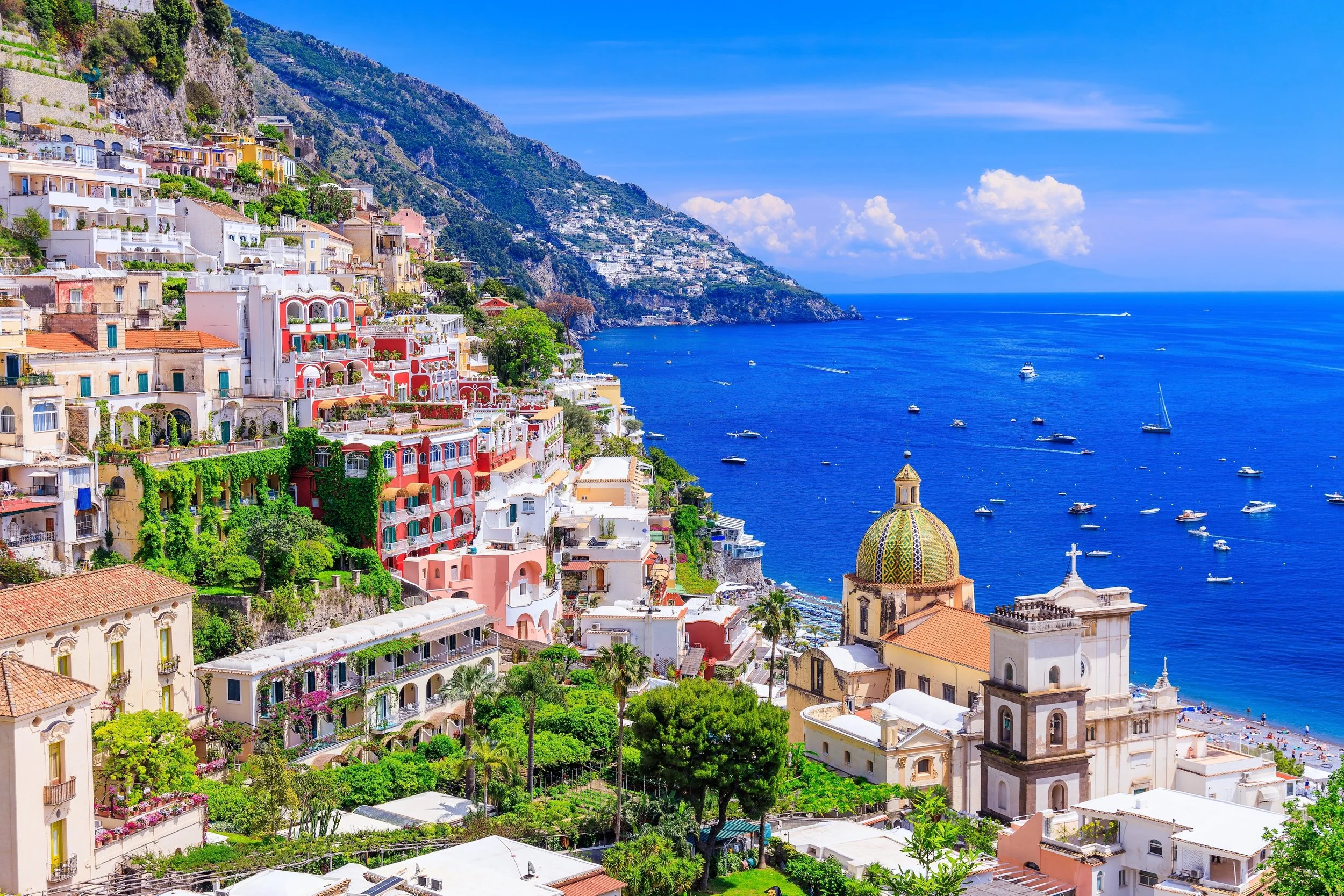
Positano homes on the colorful Amalfi Coast
That legacy carried forward. By the eighteenth and nineteenth centuries, the Amalfi Coast became a prized destination of the Grand Tour, its villas and hotels hosting writers, aristocrats, and artists drawn by landscape and light. In the twentieth century, the coast’s homes framed a distinctly modern idea of aspiration. Film stars, political figures, and cultural icons—from Sofia Loren, whose life and persona were inseparable from southern Italy to writers like Gore Vidal in nearby Ravello—found here a version of home that was elegant, outward-facing, and deliberately visible. Yet even in its glamour, Amalfi’s architecture remains a negotiation with place: narrow plots, steep terrain, terraces stacked carefully against gravity. The coast reminds us that even the most cultivated homes are shaped by constraint, and that beauty itself is often a response to the limits of land.
Naples: Home at Street Level
Naples offers a necessary counterpoint. Here, home has often existed not above the city, but within it. For more than two millennia, Naples has been one of Europe’s most densely populated cities, layered with Greek foundations, Roman streets, medieval alleys, and the pressures of Spanish rule and Bourbon governance. Space was scarce, and domestic life adapted accordingly. Within the historic center, the Bassi Napoletani—ground-level dwellings opening directly onto the street—emerged as a pragmatic response to crowding, poverty, and constant human flow.
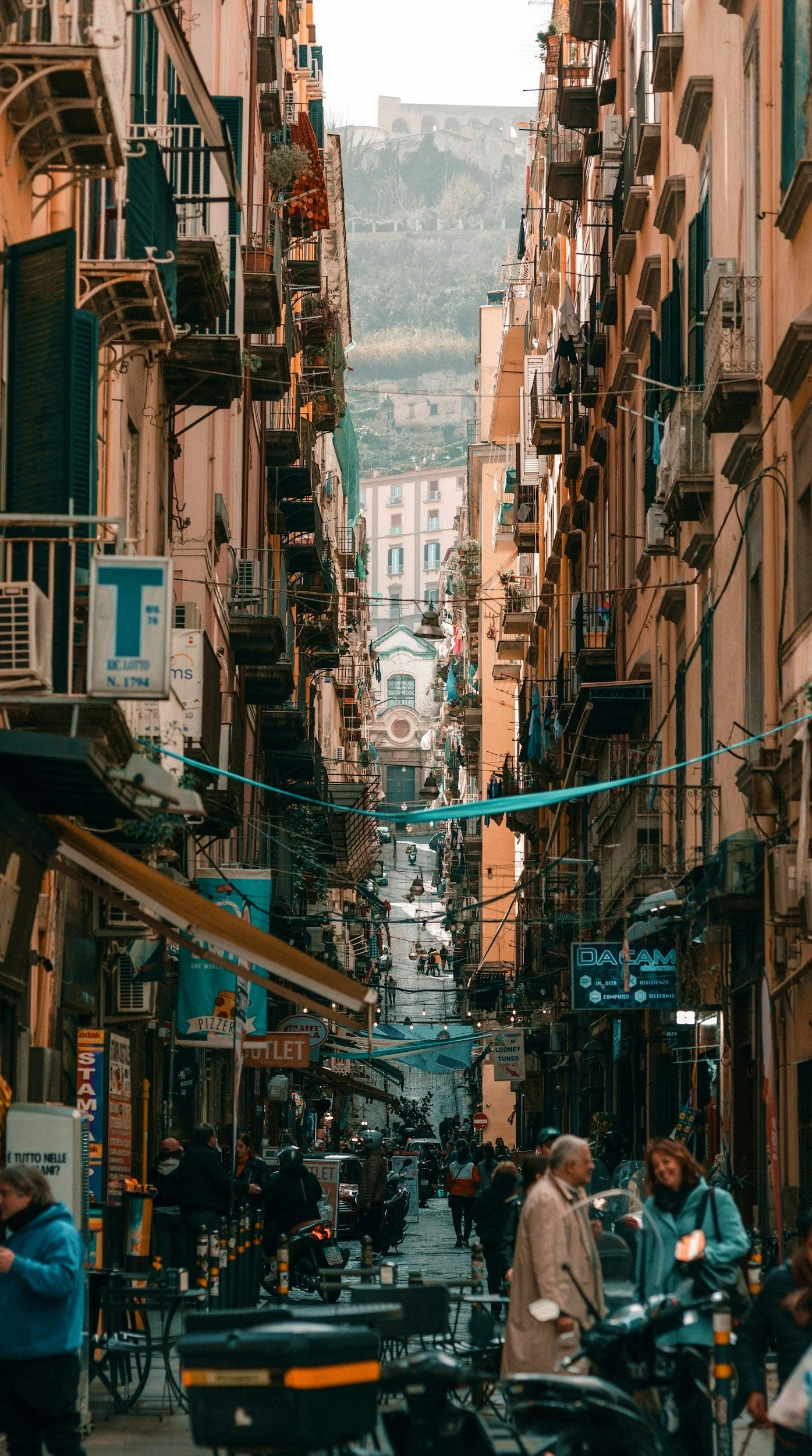
Life is lived inside out in Naples
These single-room homes were shaped by centuries of constraint. During the Spanish period, when Naples was one of the largest cities in Europe, populations surged without corresponding infrastructure. After World War II, housing shortages deepened their use. The Bassi became homes for working families, migrants from the countryside, and those excluded from formal housing, not by choice, but by necessity.
In the Bassi, home is porous. Doors remain open, not symbolically, but functionally—light, air, and connection are essential in spaces so small. Life spills outward. Cooking, conversation, work, and rest blur into the street itself. The boundary between private and public dissolves. Privacy is limited, but presence is constant.
Long stigmatized as symbols of deprivation, the Bassi also reveal something essential about Naples: a city that has survived through improvisation, proximity, and collective life. These homes reflect a culture in which endurance outweighs comfort and visibility replaces isolation. Naples reminds us that home is not always a refuge from the world; sometimes it is a negotiation with it, lived in full view, shaped by resilience, adaptability, and an unbroken sense of human closeness.
A Homecoming of Understanding
Across Southern Italy, home takes many forms. It is carved into ravines and assembled stone by stone. It is abandoned when the land gives way and preserved by chance when disaster intervenes. It is staged for beauty along the coast and lived openly at street level in the city. Some homes endure for millennia; others disappear within a generation. All of them tell us something essential about the people who lived inside them.
Taken together, these places reveal that home is never static. It is shaped by geography and power, by scarcity and aspiration, by continuity and rupture. It reflects not only how people lived, but what they valued, what they endured, and what they were willing—or forced—to leave behind.
In Southern Italy, that understanding unfolds slowly. . . through stone worn smooth by hands, thresholds crossed for centuries, rooms emptied and refilled with life. To travel this way is not to look backward, but to return to something fundamental: a reminder that to know a place, we must first understand how people called it home.
Travel can be a homecoming — not to a place we once lived, but to a deeper understanding of how people belong to the world.
A Homecoming Worth Taking
This understanding—that home is where meaning accumulates over time—guides our approach to Southern Italy. We don't rush from sight to sight. We linger. We listen. We pay attention to thresholds worn smooth by centuries of crossing, to rooms that still hold the warmth of daily life, to places where belonging was earned through adaptation, endurance, and hope.
Nina knows these places not as destinations, but as chapters in an ongoing story. Her family roots and years living in Campobasso and Naples mean she approaches Southern Italy as someone returning home, not discovering it for the first time. That belonging becomes yours when you travel with her.
We stay two nights in the Sassi cave dwellings of Matera—not as novelty, but as immersion. We gather for wine inside an original trullo in Puglia, experiencing hospitality as it was once practiced: grounded, local, unhurried. We walk Naples at street level, where life has always spilled outward, shaped by proximity and resilience.
This is travel as homecoming—not to a place you once lived, but to a deeper understanding of how people belong to the world.
If this way of seeing resonates with you, we'd love to have you join us.
Our Southern Italy Detour runs May 7-18, 2026, but spaces are limited and we must release our hotel rooms by January 31st. Some accommodations—like the Sassi cave hotel and our family-run Amalfi Coast lodging—book years in advance. Once released, this particular journey becomes impossible to recreate with Nina's connections intact.
Southern Italy Detour: May 7-18, 2026:
Questions? Call us at 801-718-4121.