
Chasing Gemütlichkeit: Why Germans Invented Christmas
A Detour Through Dark Forests, Living History, and the World's Most Magical Markets
The Light in the Dark Forest
Close your eyes. It’s deep winter in Thüringen. The air bites with that particular cold that has no opinion - it simply is. Dark pines press in on all sides, their branches heavy with the kind of silence that existed long before electricity. And then, through the trees: warmth. A village. The amber glow of windows, the featherweight drift of smoke, and drifting toward you on the night air, the scent of spiced wine and something baked in someone's grandmother's oven.
Gemütlichkeit. It is one of those German words that defies clean translation. "Cozy" comes close, but falls short. It is, more precisely, the feeling of belonging - of warmth that is earned by the cold around it, of community that means something because the night outside is long. Germans did not invent Christmas, of course. But they gave it its shape, its smell, its glow. And if you want to understand why, you have to go there. That is the Detour we want to take you on.

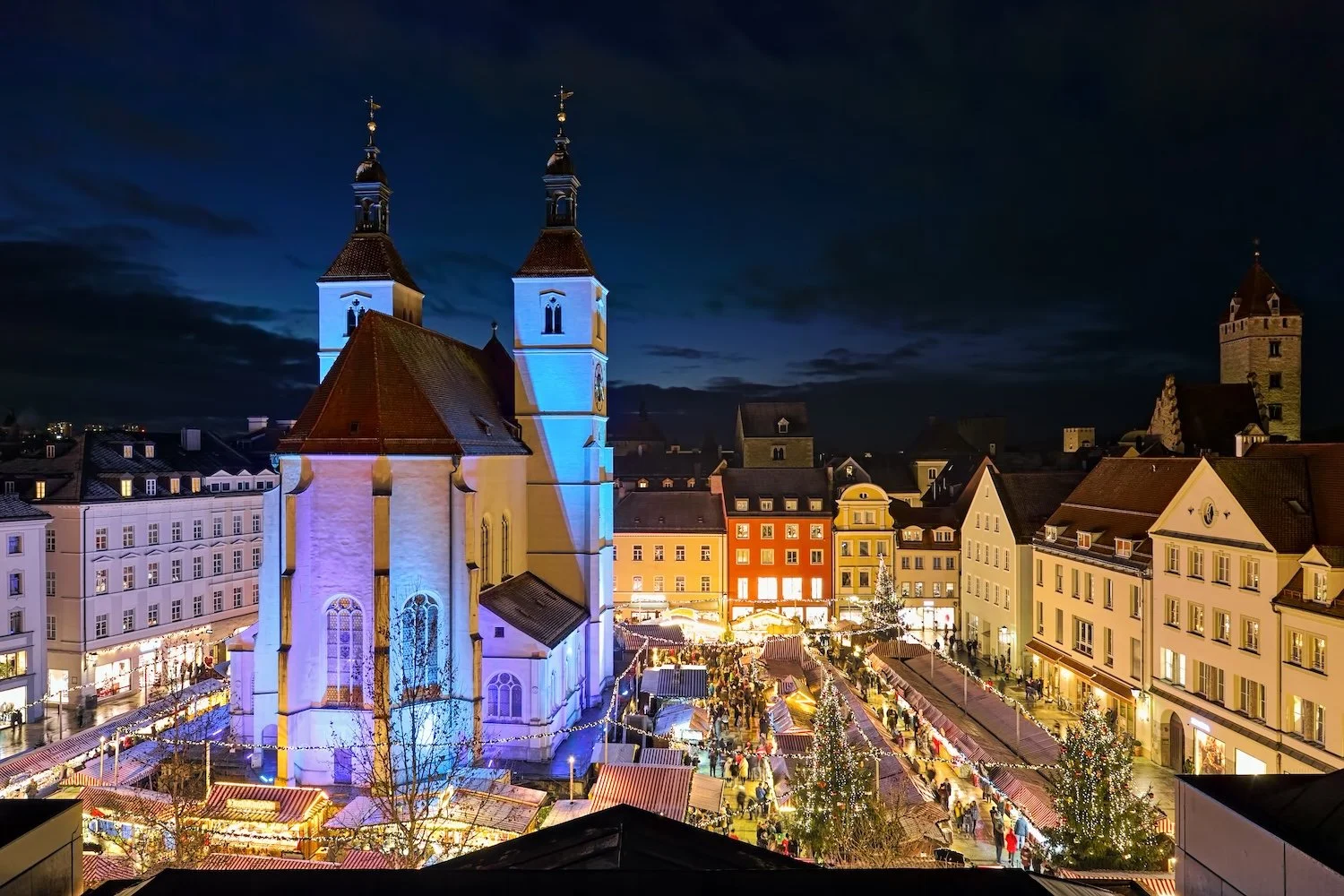
Regensburg’s historic Turn & Taxis market
The Cradle of Christmas: Regensburg & Nuremberg
Germany's Christmas markets are among the oldest in the world, and among the most imitated - but imitation never quite captures the original. You will know this the moment you step into the Alte Stadt (Old Town) of Regensburg and find yourself surrounded by a UNESCO World Heritage Site that has been continuously inhabited since the time of Marcus Aurelius.
Regensburg is where this Detour begins, and it earns its three days. The Thurn und Taxis palace - a former Benedictine monastery turned aristocratic estate - hosts one of Germany's most atmospheric Christmas markets, the Romantic Christmas Market of Thurn and Taxis.
From Regensburg, the journey arcs north to Nuremberg - home to the Christkindlesmarkt, one of Germany's oldest and most famous Christmas markets, known fondly as 'the little city of wood and cloth.' The stalls pack the medieval town center with handmade decorations, the air sweetened with Lebkuchen - Nuremberg's signature spiced gingerbread - and the sharp, spiced perfume of mulled wine. It is sensory overload of the very best kind.
But Nuremberg is also a city of layered history, its medieval beauty sitting alongside a more complicated past. To walk its streets with an informed guide is to understand that Germany's relationship with its own history is unusually honest - the country has done the difficult work of remembering and reckoning, and it is all the more powerful for it.
A Personal Detour: Behind the Iron Curtain
Now the journey turns - from the glitter of the markets to something rarer and more personal. This is where Dressler Detours becomes something no guidebook can replicate.
Christoph, our co-founder and guide, grew up in the Thüringen forest. His childhood memories are rooted there - in the Brothers Grimm quality of the dark winter forest that 'spilled into the glowing warmth of the village.' He remembers sitting on the hills of the Thuringian Forest at night, looking south, where roughly five kilometers below him the Inner East German Wall carved the world in two. Beyond it, the light-domes of West German towns glowed on the horizon - bright and unreachable. In East Germany, conserving electricity kept the nights darker. The west was lit like a Christmas tree.
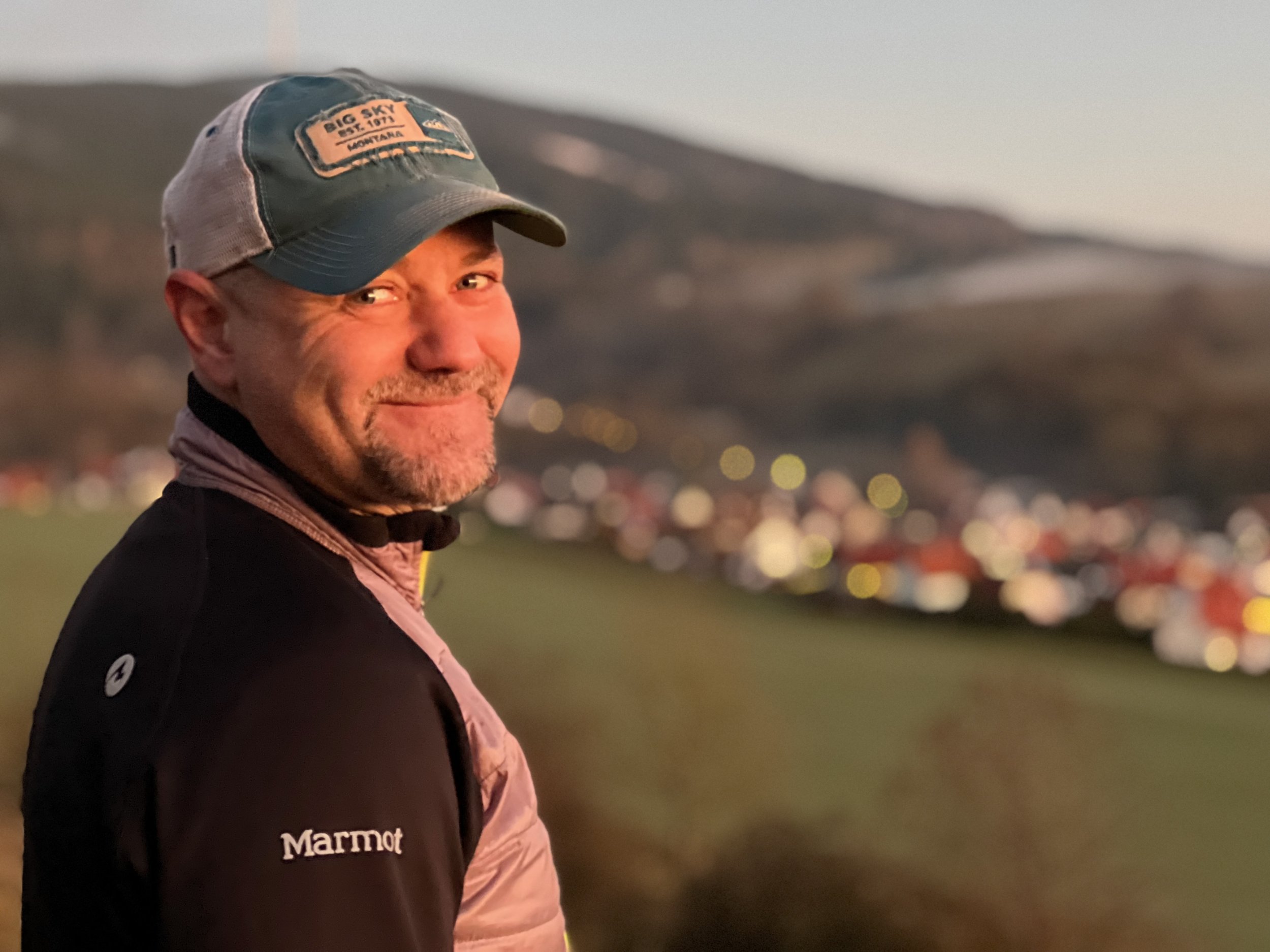
Christoph Dressler
The Iron Curtain fell in 1989. Christoph eventually won a scholarship to study in the USA. He has since traveled the world, building Dressler Detours on the belief that the best travel isn't visiting a place - it's understanding it. And nowhere does he embody that belief more completely than in the forests he grew up in.
On this day of the Detour, Christoph takes us home. Mere minutes from Coburg, the remnants of the Inner East German Wall still mark the landscape - watchtowers, fence lines, the topography of a divided world.
After a cozy lunch at the Triniushütte - a family-run forest retreat deep in the Thüringen trees, with regional specialties designed to warm both body and soul - we arrive in Lauscha. It is here, in the 19th century, that the modern glass Christmas ornament was born. We learn the legacy of glassblowing from the Glass Princess herself - and leave with a new appreciation for every ornament that has ever hung on a tree.
Taste & Tradition: Bamberg, Coburg & Dresden
Every great journey feeds you - literally and figuratively - and this Detour does not disappoint.
The medieval World Heritage town of Bamberg is a feast for the senses before you even sit down to eat. Its winding streets and striking half-timbered architecture feel lifted from a storybook, its Christmas market bright against the winter grey. But the real revelation at Bamberg is liquid: Rauchbier, the town's legendary smoked beer. Served at the historic Schlenkerla tavern, it is a beer that tastes like it was brewed beside a campfire - rich, smoky, and unlike anything you have had before.
And then there is Dresden.
Dresden is where Germany's Christmas story reaches its most complex and moving chapter. Home to the Striezelmarkt - Germany's oldest Christmas market, dating to 1434 - it is also a city that knows something profound about loss and resurrection. In February 1945, Allied bombing reduced the baroque masterpiece to rubble. Decades later, after reunification, Dresden began the extraordinary work of rebuilding - painstakingly, stone by stone, using historical records and recovered rubble to reconstruct what had been lost.
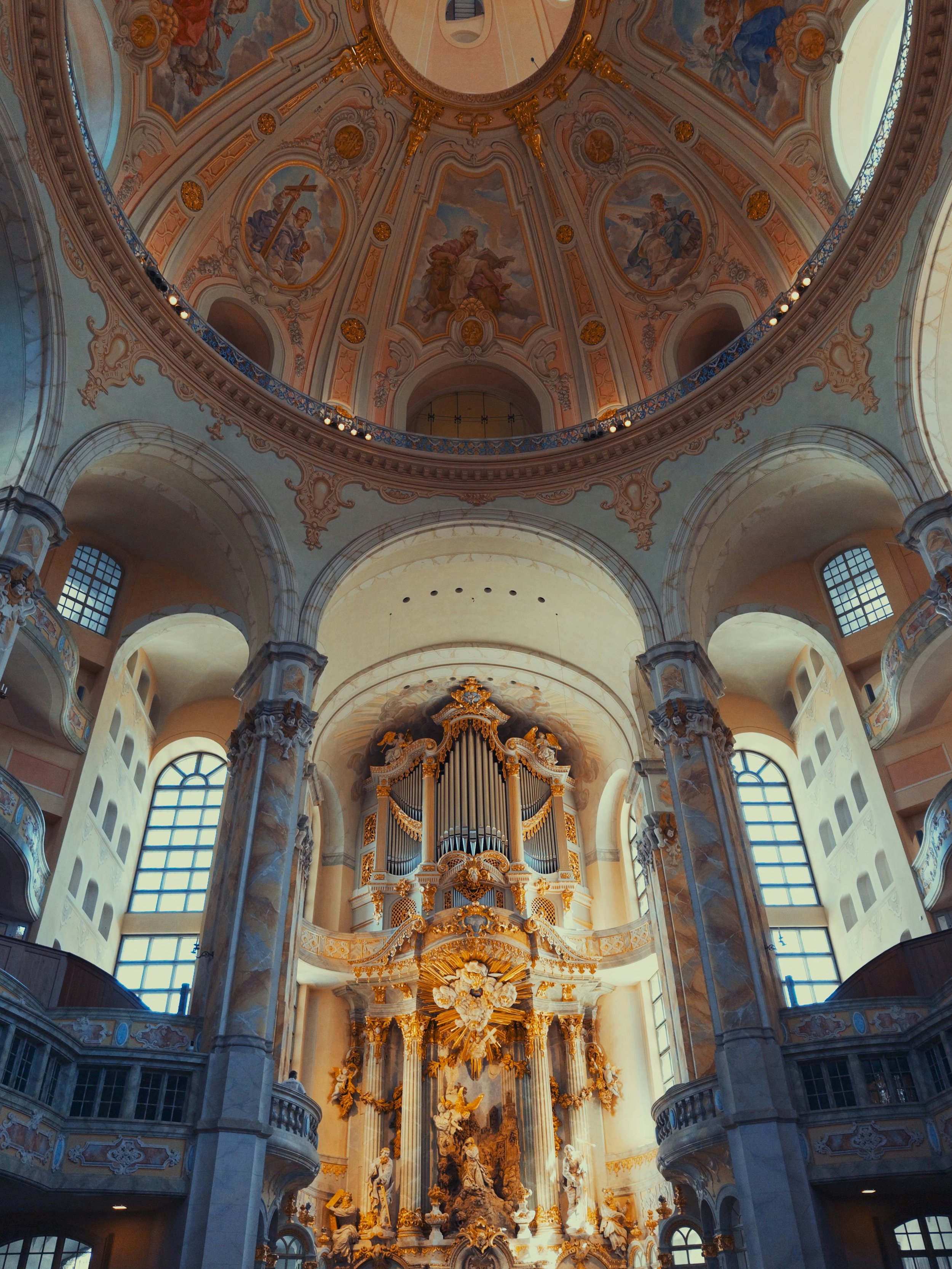
The Church of our Lady in Dresden
The Frauenkirche - the Church of Our Lady - is the most powerful symbol of that effort. Its reconstruction was completed in 2005, sixty years after its destruction, and it stands today as one of the most moving arguments for hope and perseverance that architecture has ever made. To visit it at Christmas, surrounded by the lights and music of the Striezelmarkt, is to understand why the season carries the weight it does for this city.
Before that, though: the Stollenfest. Every year, Dresden celebrates its famous Stollen - a dense, buttery, fruit-filled Christmas bread - with a festival of medieval pageantry, music, and the ceremonial parade of a truly monumental fruitcake. It is joyful, a little absurd, and entirely wonderful. Dresden knows how to celebrate.
Auf Wiedersehen - Until We Meet Again
What stays with you after a journey like this is not any one moment, but the feeling they add up to. The sharp cold of Thüringen. The amber warmth of a market stall. A smoked beer in a 600-year-old tavern. The silence of a watchtower. A glass ornament catching the light in a mountain village. The Frauenkirche standing in the winter dusk, rebuilt from its own rubble, glowing.
Germany did not just give the world Christmas markets. It gave Christmas its texture - the pine, the candlelight, the warmth against the cold, the very concept of Gemütlichkeit. And to experience all of that with a guide who carries the landscape personally, who grew up watching the west glow from the hills of his divided country, who knows the Glass Princess and the Triniushütte and the watchtower by name - that is not tourism. That is understanding.
We don't say goodbye. We say Auf Wiedersehen - until we meet again.
Ready to feel Germany, not just see it?
Join Christoph on the Germany Christmas Markets Detour 2026
and step into the fairy tale for yourself.