
An Island Born of Promises
The Patient Devotion of the Boka Bay
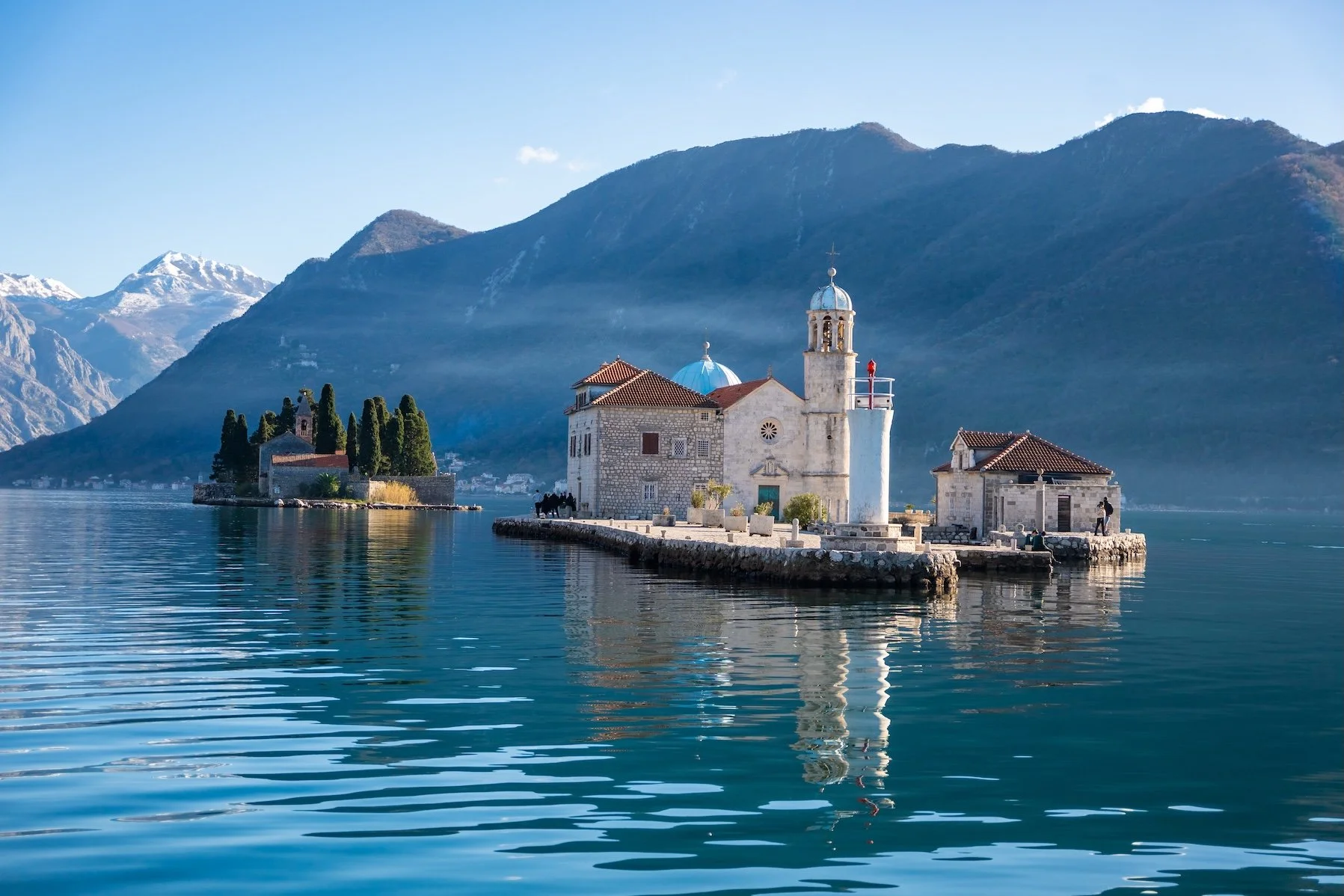
If you stand on the stone waterfront of Perast, a quiet coastal town nestled in the folds of Montenegro’s Bay of Kotor, the world can feel almost impossibly dramatic. Here, the dark limestone massifs of the Dinaric Alps do not slope gently into the Adriatic; they plunge directly into it, creating a landscape of raw, vertical geometry. It is a place defined by a permanent dialogue between the shore and the cliffs - a reality that inspired the title of our upcoming journey: Between Sea & Stone.
But if you look out across the glassy, fjord-like waters of the bay, your eyes will inevitably land on an anomaly. Sitting just offshore are two tiny islands. One is shaded by a somber grove of cypress trees. The other is crowned by a brilliant blue-domed church.
To the casual traveler rushing past on a motorboat, it is a beautiful photo opportunity. But to sit on the pier and truly listen to the rhythm of this place is to discover a deeper story. The island with the blue dome shouldn't exist. It wasn’t formed by the cooling of volcanic rock or the shifting of tectonic plates.
It was built entirely by hand, one stone, and one promise, at a time.
The Cumulative Art of Patience
The island is called Gospa od Škrpjela, which translates to Our Lady of the Rocks. Its history began on a midsummer night in 1452, when two local fishermen returning to Perast found an icon of the Virgin Mary washed up on a tiny, jagged reef sticking out of the water.
The townspeople took the discovery as a sign, but the reef was too small to support a shrine. So, they made a collective vow to build an island.
For the next two centuries, every time a local ship returned safely from a long and perilous voyage across the Mediterranean, its captain would row out to the reef and drop a heavy stone into the sea. Whenever an old vessel outlived its usefulness, the townspeople would fill its hull with rocks and intentionally sink it on the site. Year after year, decade after decade, the community quietly, painstakingly built a foundation beneath the waves.
Every single July for over five hundred years, the people of Perast have kept this tradition alive in a ritual known as the Fašinada. At sunset, locals tie their wooden boats together, decorate them with green boughs, and row out in a long, singing procession to drop more stones into the water.
It is the ultimate masterclass in slow building. It reminds us that the things that endure are rarely created in a flash of frantic energy; they are built cumulatively, through generational patience and steady intention.
Listening to the Silver Walls
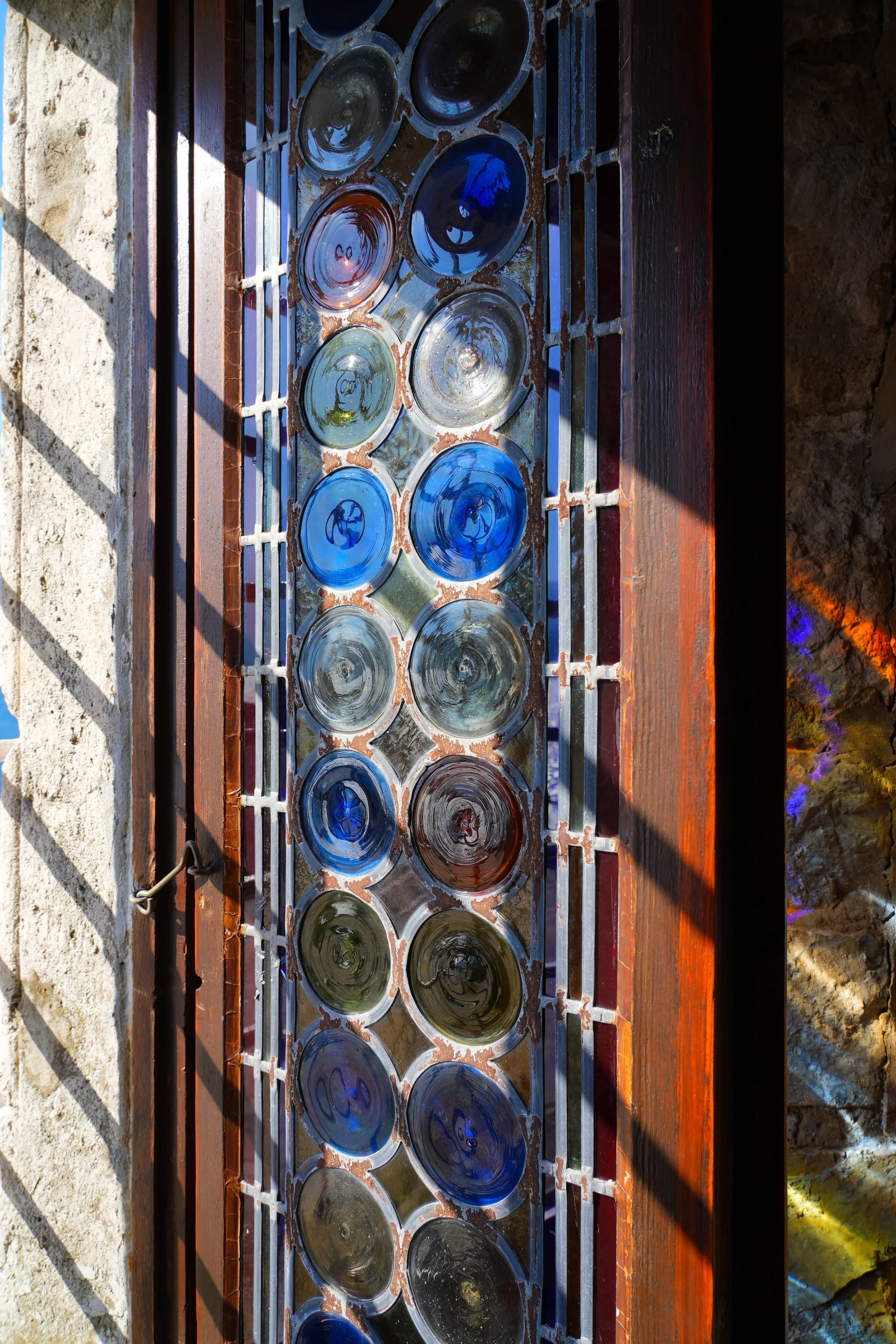
When we step onto the island during our 2027 Montenegro Detour, the transition from the open air to the interior of the church changes your breathing.
The walls are not covered in gold leaf or grand, distant frescoes. Instead, they are lined with over two thousand silver votive tablets, hammered by hand by local silversmiths. Each tablet represents a story of human vulnerability. They were left by sailors who faced the fury of the open ocean, or by the wives and mothers who spent months looking out at the horizon, waiting for a sail to appear against the grey cliffs of the bay.
We take the time to stand in the quiet of this sanctuary because this is where the true texture of Montenegro reveals itself. We aren't just looking at artifacts; we are peering into the emotional architecture of a maritime culture. You begin to understand that for the people who lived between these unforgiving mountains and the unpredictable sea, faith wasn't a philosophical concept - it was a physical anchor.
Bypassing the Current
In the modern landscape of travel, the Bay of Kotor is heavily hit by the frantic pace of mega cruise ships. Thousands of visitors are often deposited onto the shores for a brief, three-hour sprint through the old towns before being whisked away to the next port.
But when we designed our May 2027 itinerary, we chose to step entirely out of that crowded current. We believe a destination with this much historical depth cannot be skimmed. It requires a slower pace.
By staying in the region, unpacking our bags, and allowing ourselves to "marinate" in the evening silence after the daytime crowds have faded, the bay opens up to us. We cross the water not on a hurried transfer, but at a pace that allows us to watch the light shift against the limestone faces of the mountains. We sit with local historians who help us read the seams of the old stone walls, connecting the grand history of the Venetian Republic to the intimate stories written on those silver tablets.
A Souvenir of Intention
When you eventually turn your back on the Boka Bay and return to your daily life, the memory of that tiny, hand-built island stays with you. You don't just return home with photos of dramatic skylines; you return with a shift in your internal geography.
You find yourself thinking about the fishermen who dropped the very first stones into a dark sea, knowing they would never live to see the church completed. You return home asking yourself: What am I building with my own small, daily intentions?
In Montenegro, the sea and the stone have been in a quiet, beautiful conversation for millennia. All you have to do is slow down long enough to step onto the pier, watch the oars dip into the water, and listen to what the stones are trying to tell you.
Are you ready to discover what lies between the sea and the stone? Spaces are now open for our intimate, small-group journey. Explore the full itinerary and secure your spot on our Montenegro 2027 detour page.
