Heiva i Tahiti
A Celebration of Life
powerful dance, chants, and rituals bring Polynesian culture to life in Tahiti’s most dazzling festival
In French Polynesia, summer doesn’t just arrive, it erupts. With the first beat of the to‘ere drum, the island of Tahiti begins to move. Costumes shimmer, voices rise, and the spirit of mana—Polynesia’s life force—threads past to present, ancestor to descendant, dancer to audience.
This is Heiva i Tahiti, the festival that isn’t just watched, but felt, danced, and lived. It is at once heritage, resistance, and joy: a celebration that reminds Polynesians who they are, and invites us to listen.
Next July, we’ll be there. Our Tahitian friends are opening doors not to a show, but to the cultural heartbeat of their islands, and we can’t wait to share it with you.
From Suppression to Survival
Polynesians have inhabited these islands for thousands of years, with dance, chant, and storytelling woven into rituals, ceremonies, and daily life. But when European missionaries arrived in the late 18th century, much of this cultural expression was banned as indecent or incompatible with the new religion. The swaying hips of ‘ori Tahiti were particularly targeted, silenced for nearly a century.
The story of Heiva begins in 1881, when Tahiti became a French territory. That year, Polynesian cultural demonstrations were permitted as part of France’s Bastille Day celebrations on July 14th. At first, the event, then called Tiurai, the Tahitian word for July, was little more than a colonial spectacle. Over time, Polynesians reclaimed it, infusing it with their own stories, rituals, and pride. In 1985, when French Polynesia gained autonomy, the name was officially changed to Heiva i Tahiti, meaning “celebration of life.”
Today, Heiva stands as a proud declaration of survival and sovereignty. When the drums sound, you’re not just watching entertainment—you’re witnessing a cultural revival born out of resistance, a living archive of identity carried forward with each chant and every step.
Where Identity takes the Stage
Since its rebirth, Heiva has evolved alongside the Polynesian people. The hīmene (Tahitian singing) has always been central, while ‘ori Tahiti, once deemed offensive, was only fully reintegrated in the 1950s. Today, dozens of pupu ‘ori (dance troupes) and pupu hīmene (choirs) compete for weeks at To‘ata Square, each guided by a theme. That theme determines everything: the lyrics of the chants, the rhythm of the dances, the design of the costumes, even the staging. Most often, they retell ancient legends tied to specific islands or districts, bringing ancestral stories into the present.
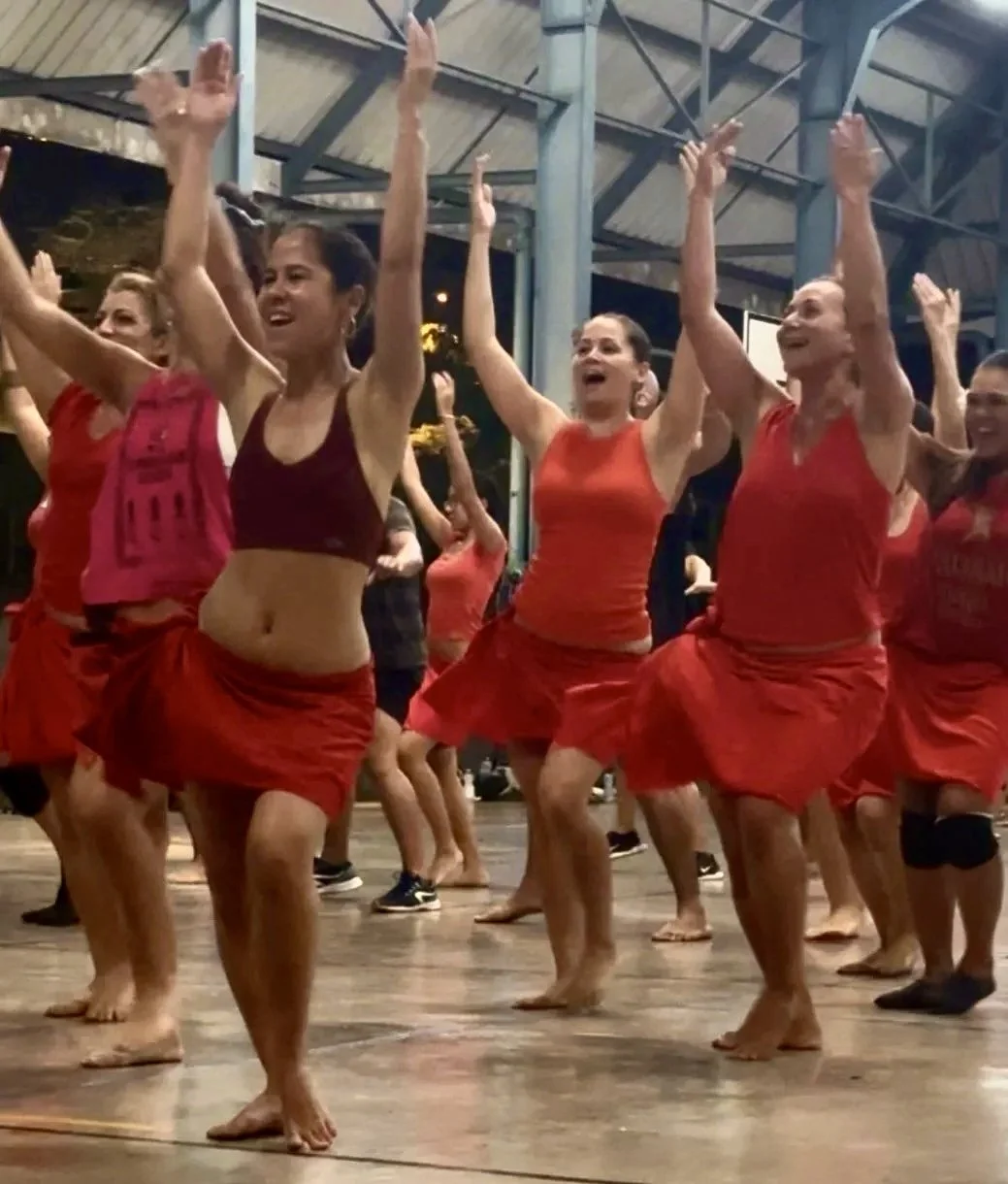
Our friend Alexandrine prepares for Heiva 2025
But Heiva is more than a performance. It’s where identity is passed from one generation to the next. For Tahiti’s youth, preparing for Heiva is a rite of passage. Months of rehearsals root them in their communities, connect them with elders, and give voice to traditions that were once silenced. The discipline of dance, the poetry of ‘ōrero, and the artistry of costume-making become not just performance skills but tools of belonging, memory, and pride.
This isn’t dance as decoration. It’s dance as archive, as resistance, as soul. The ‘ōrero (poetic oratory) grounds each performance in story, while the dancers embody its heartbeat. A troupe becomes a family: leaders like parents, costume makers like aunties and uncles, everyone carrying one another. It is a sacred bond, a living expression of identity.
And this shaping of identity isn’t limited to the stage. It extends to the sports that embody strength, resilience, and pride. Even Heiva’s sports carry this same spirit. Men hoist hundred-kilo stones onto their shoulders in feats that recall warrior training. Athletes climb coconut trees with dizzying speed, hurl spears with precision, and balance fruit-laden poles across fields. These aren’t staged spectacles, but acts of endurance and ancestral pride, as physical expressions of the same cultural identity that dances across the stage.
Woven from Story and Spirit
The costumes of Heiva are stories themselves: pandanus leaves woven into skirts, feathers tied with shells, barkcloth dyed in bold earth tones. Crafted by hand in the weeks leading up to the festival, each piece carries layers of meaning. Villages gather to cut, strip, dye, and braid natural materials, turning the abundance of land and sea into wearable art. Nothing is random—each fiber, color, and adornment is chosen with purpose, evoking ancestors, landscapes, and spirits.
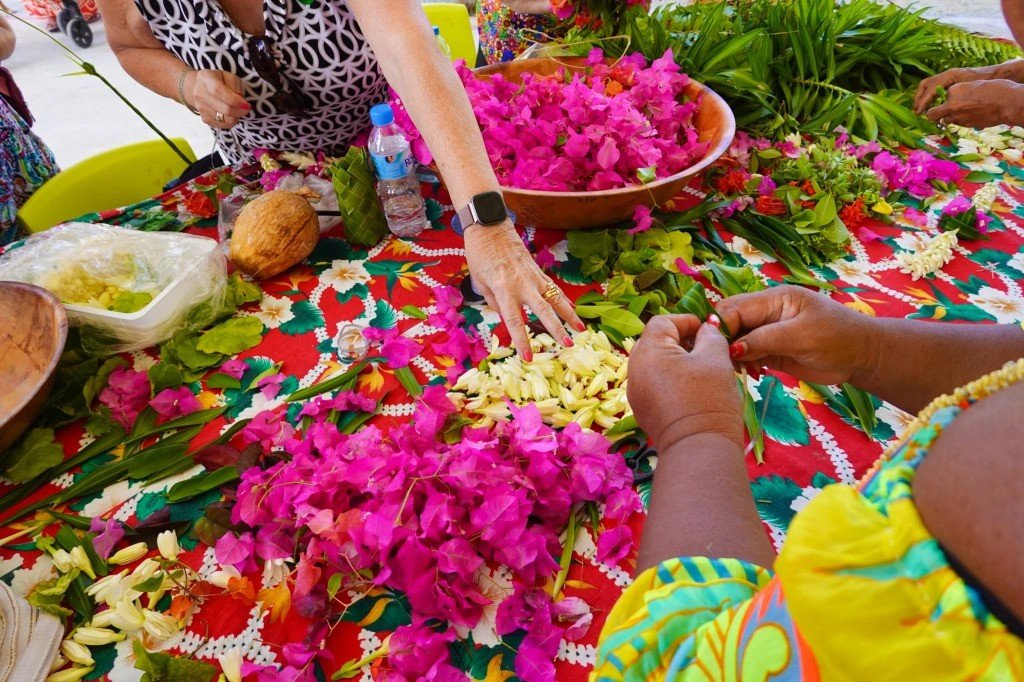
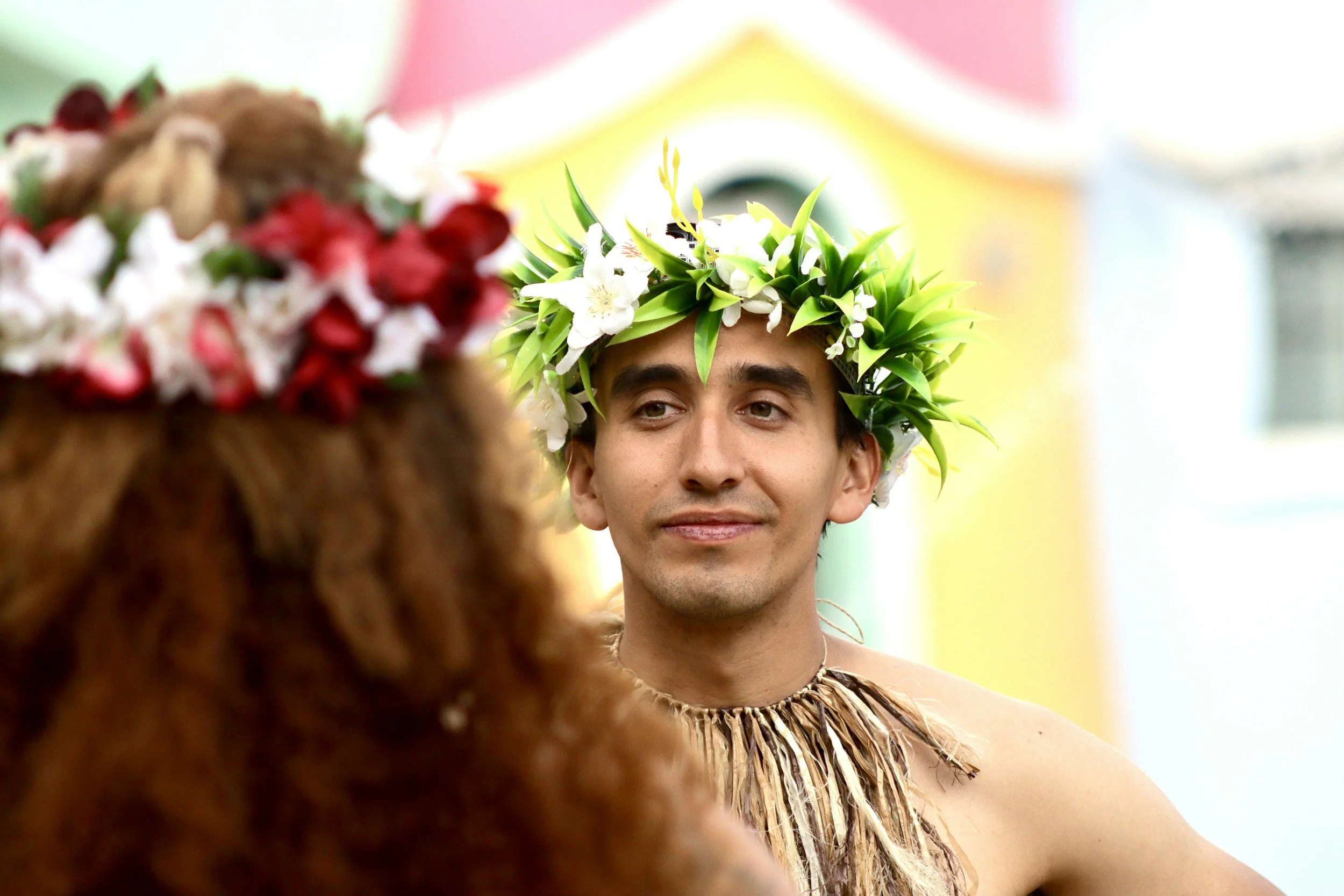
When the dancers take the stage, they don’t just wear these creations, they become them: warriors preparing for battle, waves rising and crashing, birds taking flight, spirits moving between worlds. Even the fragrant flower crowns, woven at dawn so the blossoms are still fresh, tell their own story. The thread that holds them together disappears from sight, but that thread is mana: the invisible force that binds people to one another, to their ancestors, and to the land itself.
Heiva Beyond Tahiti
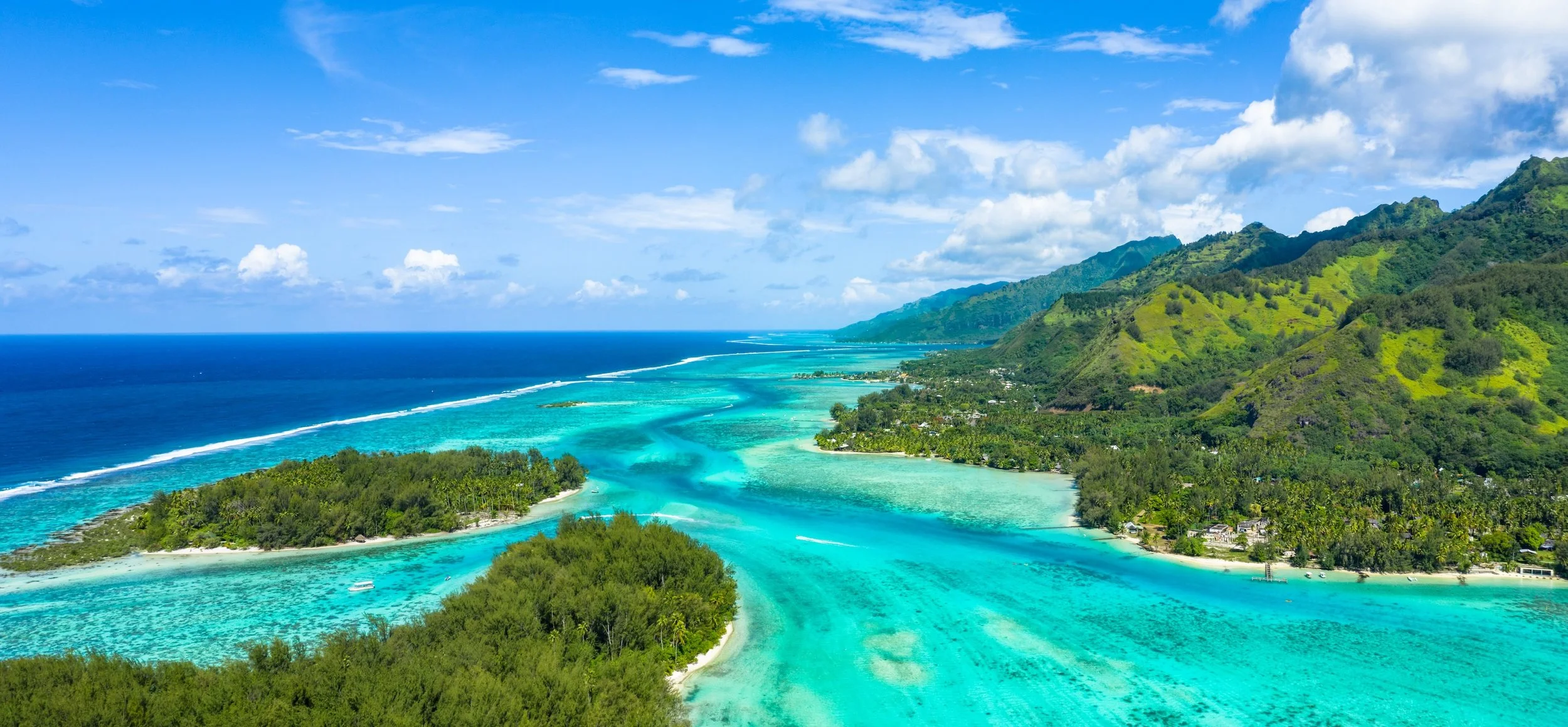
While Papeete’s To‘ata Square is the cultural epicenter, Heiva’s pulse radiates across the archipelago. On Mo‘orea, Raiatea, Huahine, and beyond, smaller community celebrations bring the same rhythm and spirit into village squares, inviting visitors not just to watch, but to join. And today, as the global ‘ori Tahiti community has grown, Heiva festivals are now held around the world: in Paris, San Diego, Tokyo, and beyond, spreading the heartbeat of Polynesia far from its shores.
As our friends in Tahiti remind us: “To promote Polynesian culture is to propose a different way of inhabiting the world. Come curious. Come open. Come to listen, learn, and be changed.”
Heiva is more than a festival—it is a celebration of life itself: a revival born from suppression, a living archive of story and song, a declaration of Polynesian identity. For Tahiti’s youth, it is a rite of passage. For their elders, it is proof that culture endures. And for all who attend, it is an invitation to feel the mana of a people proud, resilient, and radiant.
That’s why our 2026 French Polynesia Detour is timed to coincide with Heiva. To be there is to experience culture not as performance, but as a living, breathing force—one that you can see in the dance, hear in the chants, taste in the food, and feel in the community that welcomes you in. These are the kinds of immersive cultural moments that transform travel into something deeper: not just a journey to a place, but a connection to its people.
Highlights of Our French Polynesia Detour
Celebrate Heiva i Tahiti – Experience Polynesia’s most dazzling festival of dance, music, and sport, with front-row access to the cultural heartbeat of Tahiti.
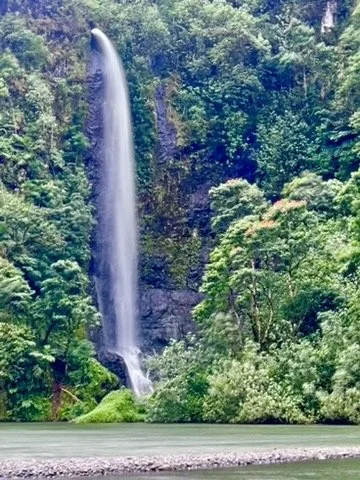
Papenoo Valley Safari – Journey by 4x4 with Teiva, a local guide whose ancestral stories bring Tahiti’s wild interior of waterfalls and cliffs to life.
Tahiti Iti & Fenua Aihere – Explore the sacred, roadless southern coast by boat, discovering ancient marae, untouched forests, and the mana of Polynesia’s last wilderness.
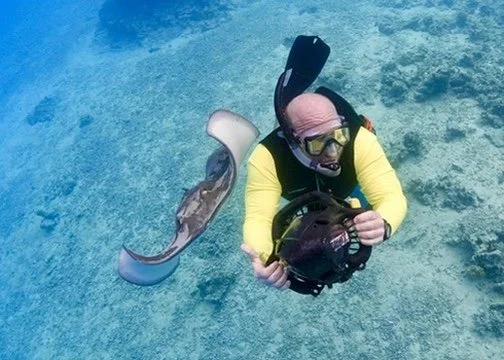
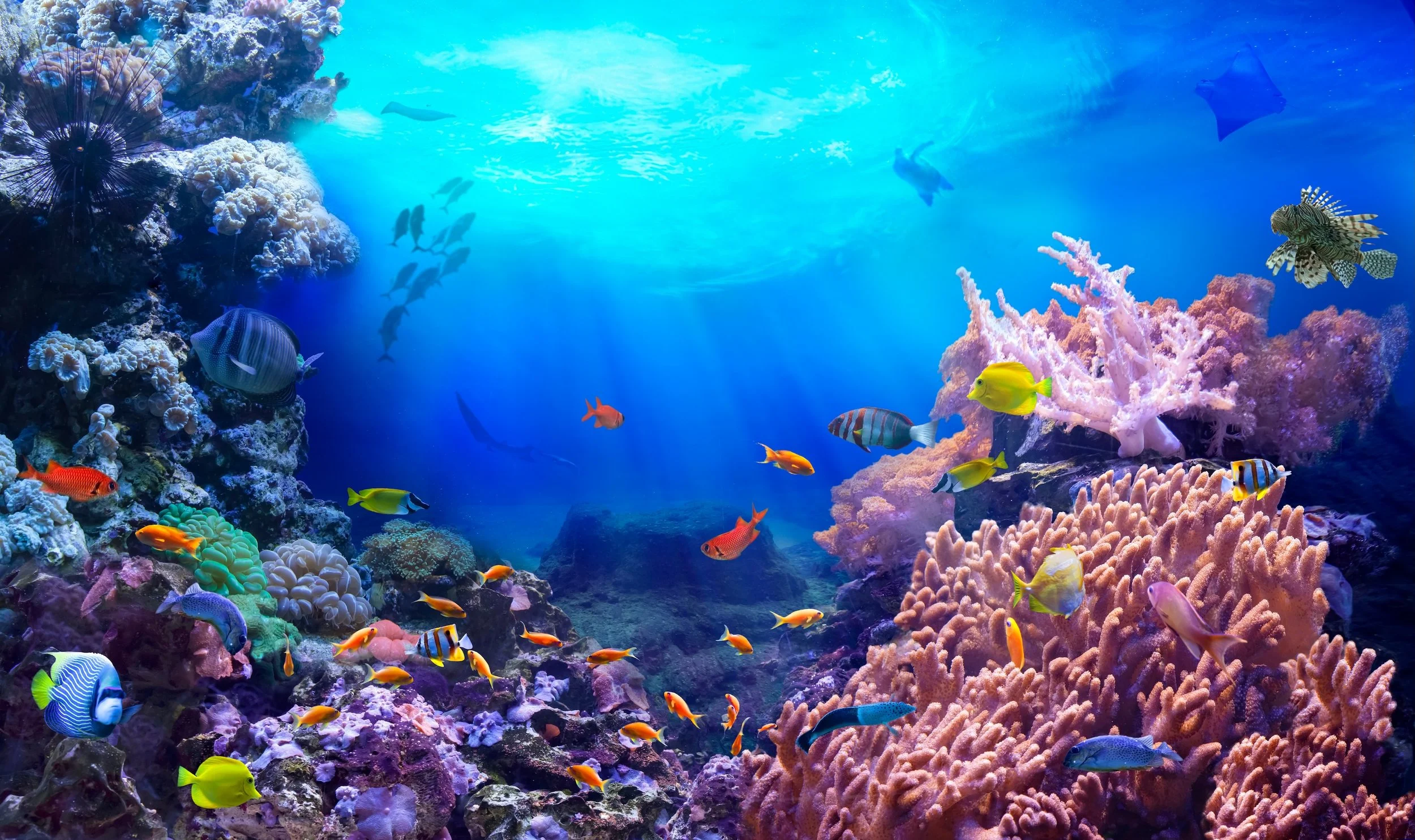
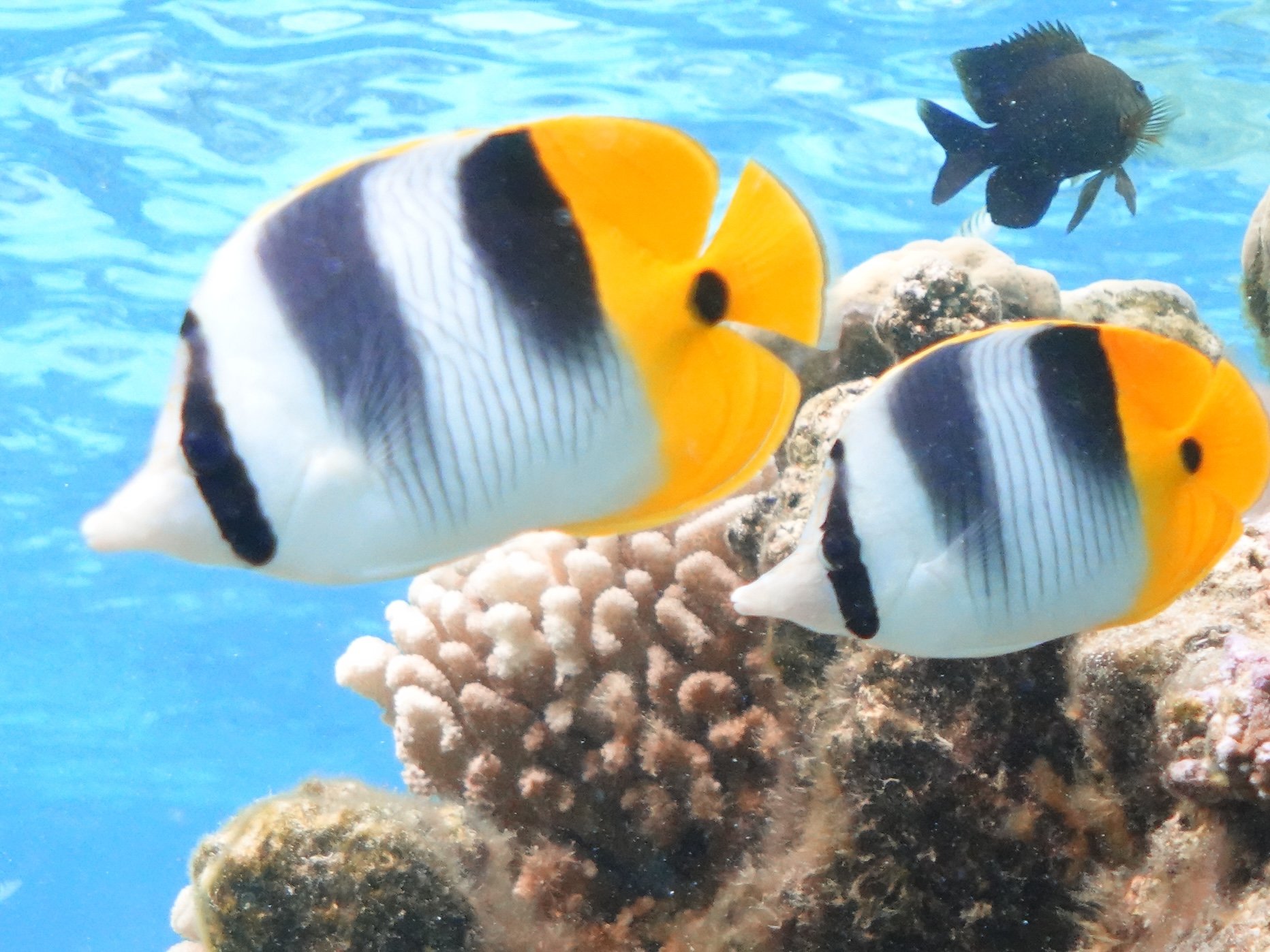
Mo‘orea’s Coral Gardens – Snorkel with a naturalist among vibrant reefs, learning about marine ecology while swimming alongside kaleidoscopic fish and corals.
Hands-On Tahitian Cooking – Join local chefs in a tropical garden to prepare dishes infused with fresh fish, island fruits, and the unmistakable sweetness of Tahitian vanilla.
Va‘a Canoeing & Dolphins – Learn the traditional art of outrigger canoeing and keep watch for playful dolphins—and perhaps humpback whales—in Mo‘orea’s turquoise lagoon.